

Why Mindful Beauty Is More Than Just a Trend
Here’s something that might surprise you: your skin remembers everything. Every sleepless night, every stress-fueled coffee run, every moment of joy or anxiety—it all shows up on your face eventually. While we’ve been busy hunting for the perfect serum or revolutionary ingredient, science has been quietly proving something profound: mindful beauty isn’t just wellness industry fluff—it’s backed by real research.
Consider this: dermatologists are now prescribing meditation alongside moisturizer, and the fastest-growing beauty category isn’t a new acid or peptide—it’s wellness for skin health. The reason? We’re finally understanding that true beauty from within isn’t metaphorical—it’s measurable, observable, and absolutely transformative.
If you’ve ever wondered why your skin looks radiant after a great vacation (despite skipping your usual 10-step routine), or why stress breakouts hit harder than any hormonal cycle, you’re about to discover the fascinating science that connects your mind, body, and complexion in ways that will change how you think about skincare forever.
The Brain-Skin Connection: How Mental Health Affects Your Skin
Your brain and your skin are in constant conversation, and unfortunately, they’re both excellent gossips. When your mind is stressed, your skin gets the memo within hours through a complex network of hormones, neurotransmitters, and inflammatory pathways that would make any telecommunications company jealous.
Did you know? Chronic stress increases cortisol production by up to 23%, which directly impairs your skin’s barrier function and triggers inflammatory responses that show up as acne, rosacea flare-ups, and premature aging.
Here’s what happens when stress and skin collide: your hypothalamic-pituitary-adrenal (HPA) axis—your body’s stress command center—releases a cascade of hormones including cortisol, adrenaline, and inflammatory cytokines. These chemical messengers don’t just make you feel frazzled; they literally change your skin at the cellular level.
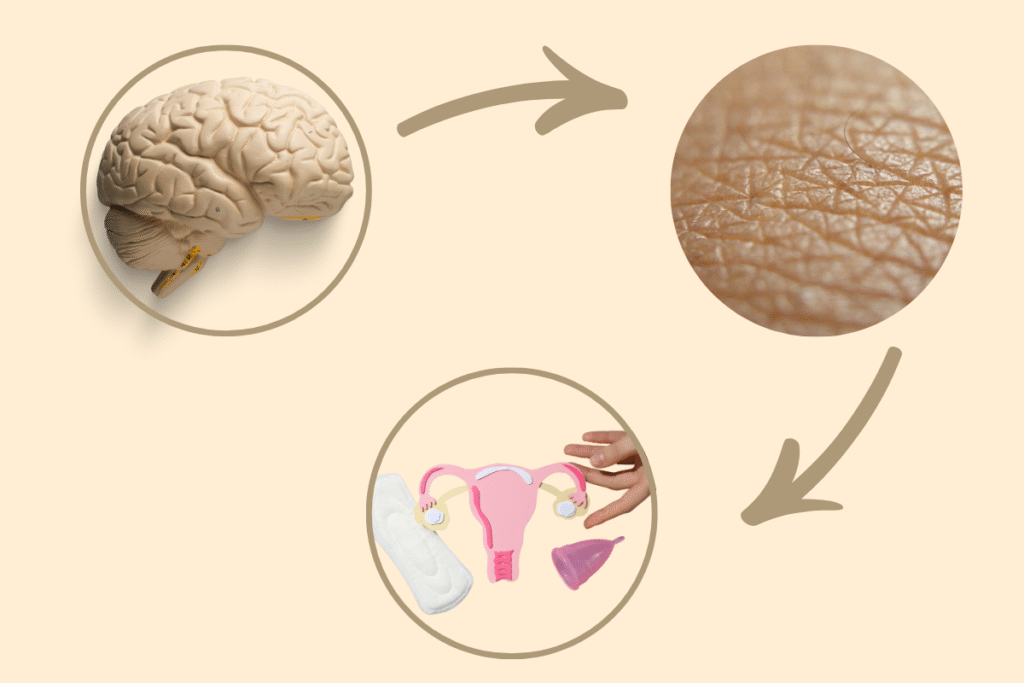
The impact on your complexion is immediate and measurable. Elevated cortisol disrupts your skin’s natural repair process, slowing cell turnover and collagen production. It also increases oil production (hello, stress breakouts) while simultaneously compromising your skin’s ability to retain moisture and fight off bacteria.
But here’s where mental wellness and beauty gets really interesting: positive emotional states trigger the opposite response. When you’re calm, content, or genuinely happy, your body produces endorphins and serotonin—natural mood elevators that also happen to be phenomenal for your skin. These “happiness hormones” reduce inflammation, improve circulation, and even enhance your skin’s natural healing processes.
Emotional wellness isn’t just about feeling good—it’s about looking good too. Research from the University of California found that people who practiced regular stress-reduction techniques showed measurably improved skin hydration, reduced signs of aging, and faster healing from minor skin damage compared to control groups.
The takeaway? Your skincare routine should include your mental health routine, because beauty and mental health are more intertwined than we ever imagined.
Holistic Skin Care: Looking Beyond the Surface
If traditional skincare is like painting a house, holistic skin care is like ensuring the foundation, plumbing, and electrical systems are solid first. You can apply the most expensive topical treatments in the world, but if your internal systems are struggling, your skin will reflect that struggle right back at you.

Think of your skin as the final page of a very long story. That story includes chapters on your sleep quality, stress levels, nutritional status, gut health, hormonal balance, and even your relationships. Wellness for skin health means reading and editing the whole story, not just perfecting the final paragraph.
The holistic approach recognizes what dermatologists are increasingly acknowledging: skin conditions rarely exist in isolation. Acne might be linked to insulin resistance. Rosacea could be connected to gut inflammation. Premature aging might reflect chronic stress or nutritional deficiencies. When we address these root causes alongside topical treatments, the results are often dramatically better than either approach alone.
Beauty from within operates on multiple interconnected systems:
- Hormonal harmony: Balanced hormones mean balanced sebum production, consistent cell turnover, and stable collagen synthesis
- Inflammatory control: Reducing systemic inflammation prevents skin from becoming reactive, sensitive, or prone to breakouts
- Nutritional optimization: Your skin cells need specific vitamins, minerals, and antioxidants to function optimally
- Circulation enhancement: Good blood flow delivers nutrients to skin cells and removes waste products efficiently
- Nervous system regulation: A calm nervous system allows your skin’s natural repair processes to work uninterrupted
This isn’t about abandoning your beloved skincare products—it’s about giving them the best possible foundation to work their magic.
What Is Mindful Beauty? (And How It's Different from Clean or Natural Beauty)
Let’s clear up some confusion, because mindful beauty gets thrown around a lot these days, often incorrectly. It’s not just another marketing term for expensive face oils, and it’s definitely not the same as clean beauty or natural skincare.

Here’s how these approaches actually differ:
| Mindful Beauty | Clean Beauty | Holistic Skincare |
|---|---|---|
|
Focus on intention, awareness, and wellness integration |
Focus on ingredient safety and avoiding “toxic” chemicals
|
Focus on lifestyle, diet, and body-mind connection |
|
Emphasizes the how of your routine as much as the what |
Emphasizes ingredient lists and formulation transparency
|
Emphasizes root causes and systemic health
|
|
Includes meditation, breath work, and ritual
|
Includes non-toxic, sustainably sourced products |
Includes nutrition, sleep, and stress management |
Mindfulness skincare is about bringing conscious awareness to your beauty routine. It’s the difference between mindlessly slapping on moisturizer while scrolling Instagram versus taking three minutes to actually connect with your skin, breathe deeply, and set positive intentions for your day.
This approach transforms your bathroom counter into a sanctuary and your skincare routine into a form of self-care rituals that nourish both your complexion and your mental state. When you practice mindful beauty, you’re not just caring for your skin—you’re practicing a form of meditation that happens to have excellent anti-aging benefits.
The science behind this is compelling: mindful practices activate your parasympathetic nervous system (your “rest and digest” mode), which optimizes circulation, reduces inflammation, and allows your skin’s natural repair mechanisms to function at their best. Beauty and mental health become mutually reinforcing rather than competing for your time and attention.
Gut Health and Skin: The Inside-Out Link
Your gut and your skin are basically pen pals who’ve been writing to each other for your entire life. And frankly, they have a lot to discuss. The skin-gut connection is so well-established now that dermatologists routinely ask about digestive health when treating skin conditions.
Here’s the fascinating science: your gut microbiome—the trillions of bacteria living in your digestive tract—directly influences your skin’s health through what researchers call the “gut-skin axis.” When your gut bacteria are happy and balanced, they produce short-chain fatty acids and other beneficial compounds that reduce systemic inflammation and support your skin’s barrier function.
But when your gut microbiome is disrupted (by stress, poor diet, antibiotics, or other factors), it can trigger a cascade of inflammatory responses that show up on your skin as acne, eczema, rosacea, or general dullness and sensitivity.
Wellness for skin health starts in your kitchen more than your medicine cabinet. Research published in the Journal of Clinical Medicine found that people who consumed probiotic-rich foods for 12 weeks showed significant improvements in skin hydration, reduction in acne lesions, and enhanced overall skin appearance compared to control groups.
Eat This for Glowing Skin:
- Fermented foods: Kimchi, sauerkraut, kefir, and yogurt with live cultures
- Prebiotic-rich foods: Garlic, onions, asparagus, and Jerusalem artichokes
- Anti-inflammatory omega-3s: Wild salmon, walnuts, and chia seeds
- Antioxidant powerhouses: Berries, leafy greens, and green tea
Skip This for Clearer Skin:
- High-glycemic foods: White bread, sugary snacks, and processed cereals
- Dairy products (for some people): Can trigger inflammatory responses
- Excessive alcohol: Disrupts gut bacteria and dehydrates skin
- Ultra-processed foods: Contain additives that can trigger inflammation
The beauty from within approach means thinking of your next meal as part of your skincare routine. Because in a very real sense, it absolutely is.
Mindfulness Skincare: How Ritual Can Improve Results
Here’s something your esthetician probably hasn’t told you: how you apply your skincare matters almost as much as what you apply. Mindfulness skincare isn’t just wellness speak—it’s actually supported by research showing that mindful application techniques can enhance product absorption, reduce stress hormones, and improve circulation.
When you rush through your routine while mentally planning your day, you’re missing out on both the meditative benefits and the physical advantages of mindful application. Gentle, intentional massage increases blood flow to your skin, which means better nutrient delivery and more efficient removal of cellular waste products.
Your 5-Minute Mindful Skincare Ritual:
Breathe (30 seconds): Before touching any products, take three deep breaths. This activates your parasympathetic nervous system and prepares your body for the self-care to come.
Connect (1 minute): Apply your cleanser with gentle, circular motions while focusing entirely on the sensation. Notice the texture, temperature, and scent. This isn’t multitasking time.
Massage (2 minutes): During your serum and moisturizer application, use upward strokes and gentle pressure. Spend extra time on areas that hold tension—your jaw, temples, and between your eyebrows.
Affirm (1 minute): While your products absorb, place your hands on your face and offer yourself one genuine compliment or intention for the day.
Appreciate (30 seconds): Before moving on, take a moment to appreciate this act of self-care and the skin you’re caring for.
The benefits of this approach extend far beyond relaxation. Self-care rituals like these measurably reduce cortisol levels, which means less inflammation, better skin barrier function, and improved healing. You’re literally massaging stress out of your face while massaging nutrients into your skin.
Mindful beauty transforms a daily chore into a meditation practice that happens to have excellent aesthetic benefits. And unlike most meditation practices, this one leaves you glowing.
The Science of Wellness for Skin Health: What the Research Says
Let’s get nerdy for a moment, because the science connecting wellness for skin health is absolutely fascinating. We’re not talking about correlation here—we’re talking about measurable, reproducible changes in skin function based on lifestyle interventions.

Sleep and Skin Recovery: A landmark study published in Clinical and Experimental Dermatology found that people who got quality sleep showed 30% better recovery from UV damage and maintained skin hydration levels 3x better than sleep-deprived participants. During deep sleep, your skin increases production of growth hormones that repair cellular damage and boost collagen synthesis.
Meditation and Inflammation: Research from Harvard Medical School demonstrated that regular meditation practice reduces inflammatory markers (including those that trigger acne and accelerated aging) by up to 20%. Even more impressive: these changes were measurable in just 8 weeks of consistent practice.
Exercise and Circulation: Wellness science shows that regular moderate exercise increases circulation and promotes the production of natural antioxidants that protect skin from environmental damage. A study in the Journal of Investigative Dermatology found that people over 40 who exercised regularly had skin characteristics more similar to people in their 20s and 30s.
Dr. Sarah Chen, a dermatologist at Stanford University, explains it this way: “We used to think of skincare as purely topical, but we now understand that skin health is systemic health. The most dramatic improvements I see in my patients come when they address both the external and internal factors affecting their skin.”
Mental wellness and beauty isn’t just about feeling good—it’s about optimizing the biological processes that keep your skin healthy, resilient, and radiant. The research consistently shows that people who prioritize holistic wellness don’t just feel better; they literally age more slowly and recover from skin damage more efficiently.
The takeaway from wellness science is clear: your skin is not separate from the rest of your body, and the most effective skincare routines treat it as part of a connected system rather than an isolated organ.
Daily Self-Care Rituals That Support Beautiful Skin
The best part about beauty from within? The most effective practices are often the simplest ones. These aren’t time-consuming spa treatments or expensive supplements—they’re small, sustainable habits that compound over time to create dramatic improvements in both how you feel and how you look.
Morning Sunlight Exposure (5 minutes): Step outside within the first hour of waking to regulate your circadian rhythm. This improves sleep quality, balances hormones, and gives you that natural morning glow. Natural light exposure also supports vitamin D synthesis, which is crucial for skin cell regeneration.
Gratitude Journaling (3 minutes): Write down three things you’re grateful for each morning. Research shows that gratitude practices reduce cortisol and increase positive neurotransmitters that support healthy skin. Plus, people who practice gratitude report higher life satisfaction—and happiness really is the best makeup.
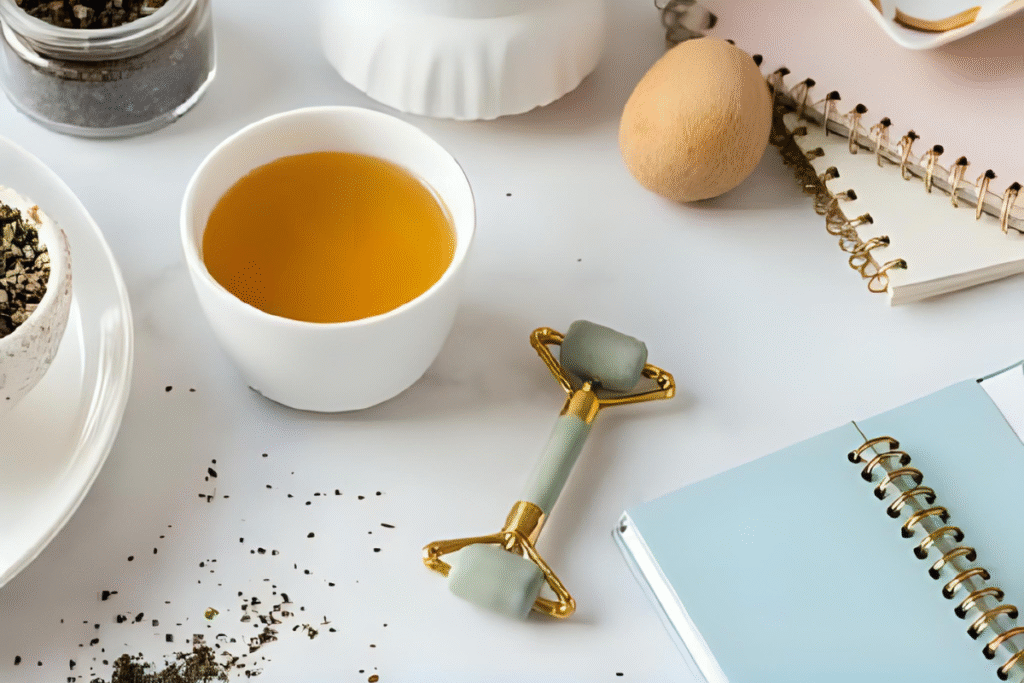
Facial Lymphatic Drainage (2 minutes): Use your hands, a jade roller, or gua sha tool to gently massage your face in upward and outward motions. This reduces puffiness, improves circulation, and helps your skin absorb skincare products more effectively.
Herbal Tea Ritual (ongoing): Swap your afternoon coffee for skin-supporting herbal teas like green tea (antioxidants), chamomile (anti-inflammatory), or spearmint tea (hormone-balancing). The hydration alone will improve your skin, but the specific compounds in these teas provide additional benefits.
Evening Breathwork (5 minutes): Before your nighttime skincare routine, spend five minutes practicing deep breathing or simple meditation. This activates your parasympathetic nervous system and prepares your body for optimal rest and repair.
Digital Sunset (1 hour before bed): Put devices away an hour before sleep to improve sleep quality and reduce the inflammation associated with blue light exposure. Better sleep equals better skin—it’s really that simple.
Weekly Epsom Salt Bath (20 minutes): The magnesium in Epsom salts helps relax muscles and reduce stress while supporting healthy sleep patterns. Add a few drops of lavender oil for extra relaxation benefits.
These self-care rituals work because they address the root causes of skin issues rather than just the symptoms. Emotional wellness and skin health are so intertwined that taking care of one automatically improves the other.
Common Mistakes: Why Your Skincare Isn't Working (If You Ignore Wellness)
If you’re spending hundreds on skincare but still struggling with skin issues, you might be missing the bigger picture. Here are the most common ways people sabotage their skincare results without realizing it—and how holistic skin care addresses these blind spots.
Mistake #1: Using a 10-Step Skincare Routine While Skipping Meals You can’t out-serum poor nutrition. If you’re not eating enough protein, healthy fats, and antioxidant-rich foods, your skin lacks the building blocks it needs for repair and regeneration. Wellness for skin health starts with nourishing your body from the inside.
Mistake #2: Obsessing Over Acne While Ignoring Anxiety Stress and skin are intimately connected. If you’re treating breakouts with harsh topicals while ignoring chronic stress, you’re fighting a losing battle. Stress hormones will keep triggering inflammatory responses no matter how many salicylic acid products you use.
Mistake #3: Buying Every New Product But Never Getting Enough Sleep Sleep is when your skin does its most important repair work. Poor sleep quality undermines even the most expensive skincare routine. You literally cannot buy your way out of sleep deprivation.
Mistake #4: Focusing on Anti-Aging While Living a Pro-Aging Lifestyle Smoking, excessive alcohol consumption, chronic stress, and poor nutrition accelerate aging far more than any topical product can reverse it. True anti-aging starts with pro-longevity lifestyle choices.
Mistake #5: Treating Symptoms Instead of Root Causes If you have persistent skin issues, they might be connected to gut health, hormonal imbalances, or chronic inflammation. Holistic skin care looks at these underlying factors rather than just addressing surface symptoms.
The solution isn’t to abandon your skincare products—it’s to give them the best possible foundation to work with. When you address these lifestyle factors alongside your topical routine, the results are often dramatically better than either approach alone.
FAQs: Mindful Beauty in Real Life
Q: How does meditation actually improve skin? Meditation reduces cortisol levels and activates the parasympathetic nervous system, which decreases inflammation and improves circulation. Studies show regular meditators have measurably better skin barrier function and faster healing from minor damage. Even 10 minutes daily can produce noticeable results within a few weeks.
Q: Is mindful beauty effective for acne-prone skin? Absolutely. Mindfulness skincare is particularly beneficial for acne because stress is a major trigger for breakouts. By addressing the stress component while maintaining a gentle, consistent topical routine, many people see significant improvements in both frequency and severity of breakouts.
Q: Can stress really cause breakouts, or is that just a myth? It’s absolutely real. Stress increases cortisol production, which stimulates oil production and triggers inflammatory responses. Stress also disrupts sleep and often leads to poor dietary choices, creating a perfect storm for skin issues. The stress and skin connection is well-documented in dermatological research.
Q: What’s the best self-care ritual for glowing skin? The most effective ritual is one you’ll actually do consistently. Start with something simple like taking three deep breaths before applying your moisturizer, or spending an extra minute massaging your cleanser. Beauty from within is about consistency, not complexity.
Q: How long does it take to see results from mindful beauty practices? Many people notice improved skin texture and a more radiant complexion within 2-3 weeks of consistent practice. More significant changes in skin clarity and overall health typically appear after 6-8 weeks, as this aligns with your skin’s natural renewal cycle.
Q: Do I need to completely overhaul my lifestyle for mindful beauty to work? Not at all. Emotional wellness and mindful beauty are about adding small, sustainable practices to your existing routine. Start with one or two changes and build from there. Small, consistent actions create bigger results than dramatic overhauls you can’t maintain.
Beauty Is an Inside Job
Here’s what I’ve learned after years of studying the science behind mindful beauty: your skin is incredibly honest. It reflects your sleep quality, stress levels, nutritional status, and emotional well-being with startling accuracy. You can try to negotiate with it, bribe it with expensive products, or cover it with makeup, but ultimately, it’s going to tell the truth about how you’re really taking care of yourself.

The most beautiful people I know aren’t necessarily blessed with perfect genetics or unlimited skincare budgets. They’re people who have learned to nurture themselves from the inside out—who understand that true beauty from within isn’t just a pretty phrase, but a practical approach backed by solid science.
Mindful beauty isn’t about adding more steps to your routine or buying more products. It’s about bringing intention, awareness, and genuine care to the practices you already do. It’s about recognizing that your morning skincare routine can be a form of meditation, that your evening ritual can be a way of releasing the day’s stress, and that taking care of your skin can be an act of emotional wellness.
The research is clear: when you prioritize your mental health, manage stress effectively, nourish your body properly, and approach your skincare routine with mindfulness and intention, your skin responds with improved texture, enhanced radiance, and better resilience against environmental stressors and aging.
Your skin is not separate from the rest of you—it’s an integral part of your overall health and well-being. The sooner you start treating it that way, the sooner you’ll see the kind of lasting, authentic beauty that no amount of cosmetics can replicate.
Ready to start your mindful beauty journey? Begin with just one small change: tomorrow morning, before you reach for your phone, spend three minutes simply breathing deeply and setting a positive intention for your day. Then notice how your skin—and your whole day—responds to this small act of self-care.
Because the most radical thing you can do for your beauty routine might just be slowing down enough to be present for it.
Share your own mindful beauty discoveries in the comments below. Remember: your skin is listening to every choice you make—make sure you’re sending it love.