
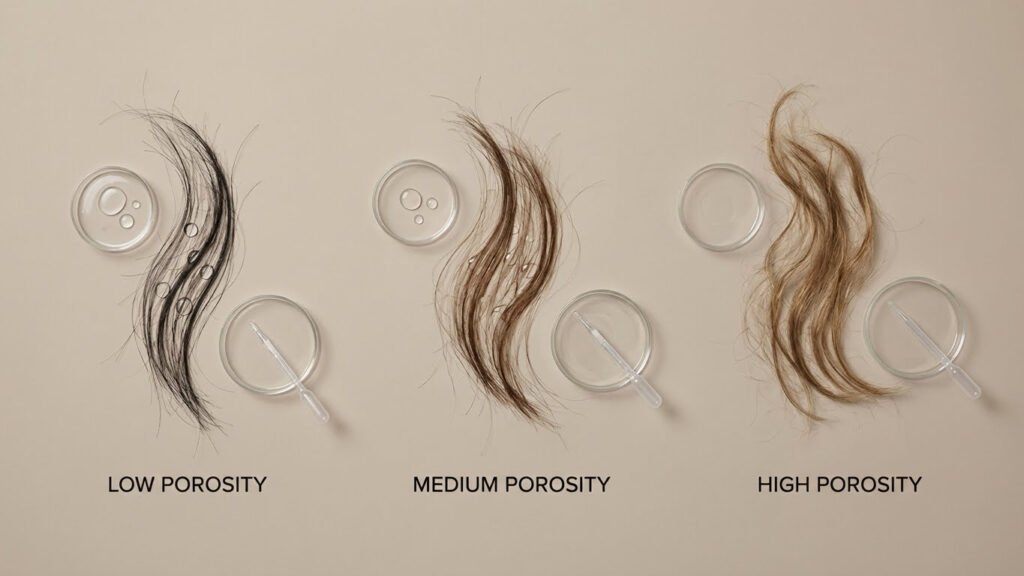
Why Understanding Hair Porosity Changes Everything
Have you ever stood in the shower wondering why your “holy grail” conditioner works miracles for everyone on TikTok… except you? I’ve been there—arms full of expensive bottles, hair still dry, frizzy, or weirdly greasy. The missing link for most of us isn’t the quality of the product—it’s hair porosity.
Your hair porosity determines how well your hair can absorb moisture and, just as importantly, how well it holds onto it. Without knowing this, choosing products is basically educated guessing (and sometimes not even that educated).
That’s where a hair porosity test comes in.
In this guide, I’ll show you how to determine your hair porosity, explain what it actually means, and help you find products for porous hair that finally make sense for your strands. Less trial and error. More good hair days. Deal?
What Is Hair Porosity? (Simple Breakdown)
At its core, hair porosity is your hair’s ability to absorb moisture and retain it. Think of each strand like a roof made of tiny shingles (your cuticles).
Here’s the analogy I love:
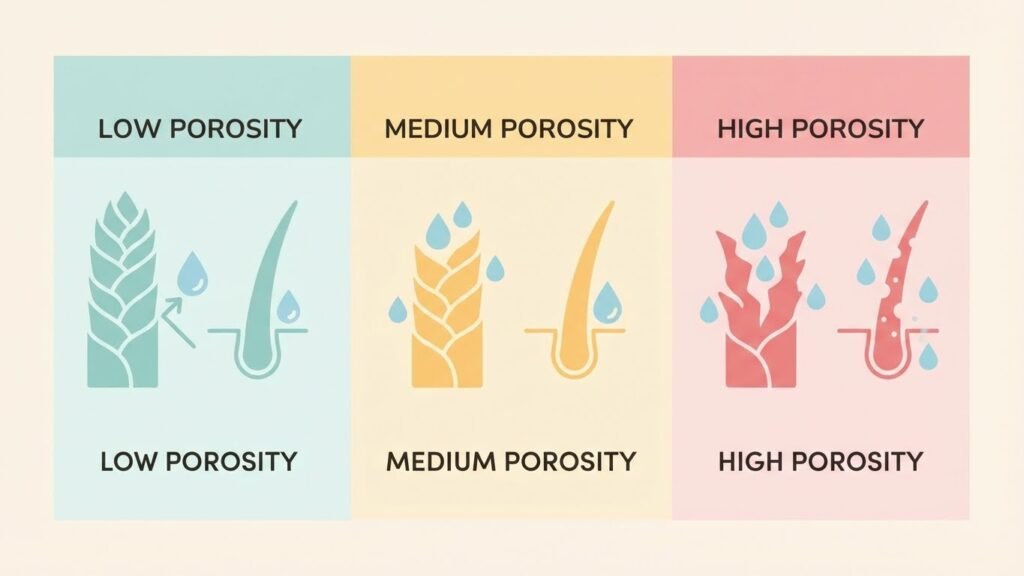
- Low porosity hair = a sealed balloon. Water struggles to get in.
- High porosity hair = a sponge with gaps. Water rushes in… and rushes right back out.
- Medium porosity hair = the Goldilocks zone.
When your cuticles are tightly closed, moisture has a hard time entering. When they’re raised or damaged, moisture enters fast—but escapes just as quickly. This structure is influenced by genetics, heat styling, coloring, and chemical treatments.
Understanding this explains why your hair might feel dry even when you moisturize constantly—or greasy even when you use “lightweight” products.
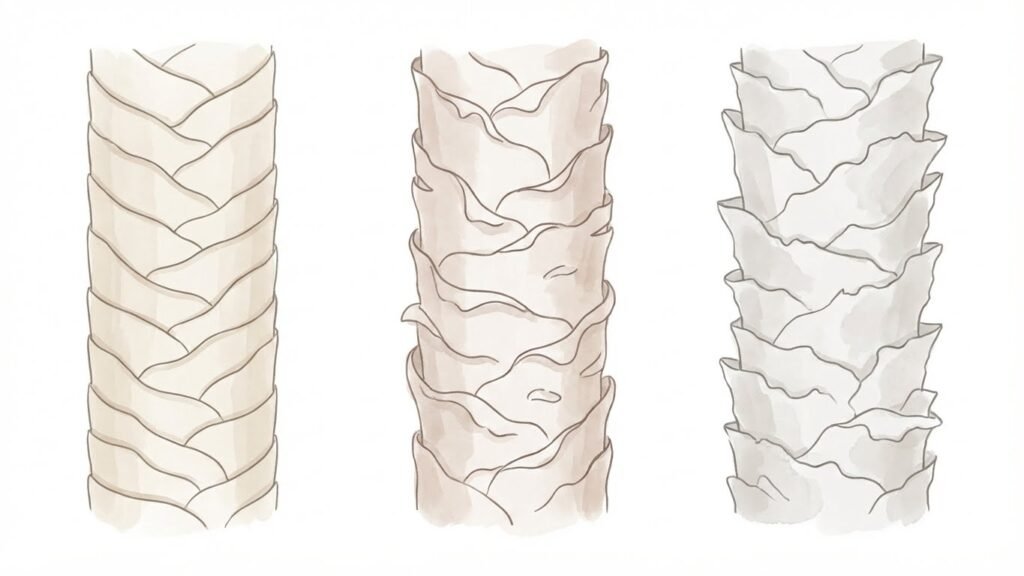
The Hair Porosity Chart — Low, Medium, High Explained
Let’s make this skimmable. This hair porosity chart gives you a quick snapshot before you even test.
| Porosity Type | Absorbs Moisture | Retains Moisture | Common Traits |
|---|---|---|---|
|
Low |
Slowly
|
Very well (once in)
|
Water beads, product sits on hair, slow drying
|
|
Medium
|
Easily |
Balanced |
Healthy shine, easy styling
|
|
High
|
Very fast
|
Poorly
|
Frizz-prone, dries quickly, tangles
|
Quick clues:
- If water beads on your strands → likely low porosity
- If hair absorbs water instantly but feels dry later → high porosity
- If products “just work” → medium porosity (lucky you)
How to Determine Your Hair Porosity (Step-by-Step Tests)
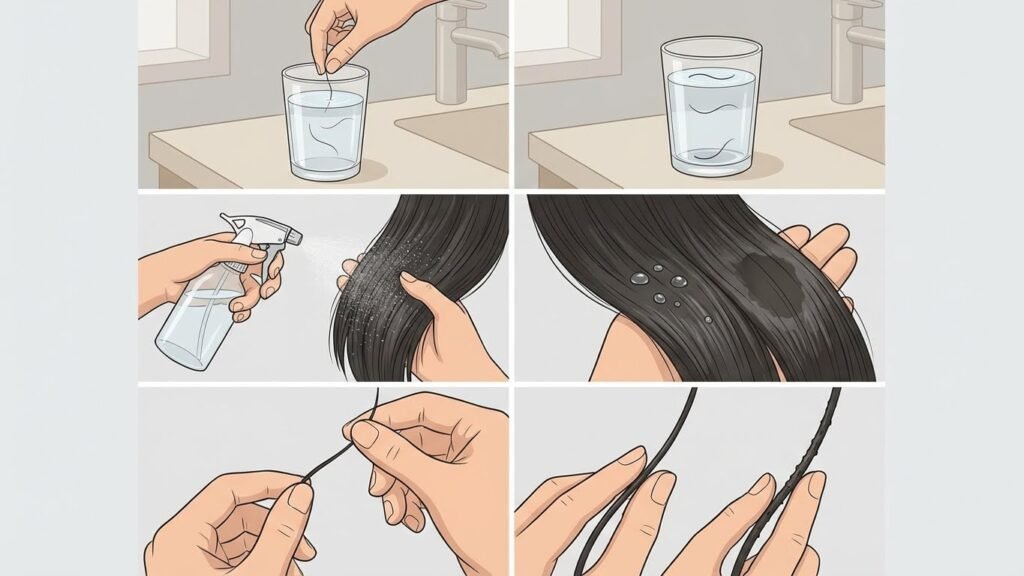
This is what most people are searching for—the hair porosity test that actually works. Use more than one for accuracy.
1. The Float Test
- Take a clean strand of hair (no product).
- Drop it into a bowl of room-temperature water.
- Watch for 2–4 minutes.
- Floats → low porosity
- Slowly sinks → medium porosity
- Sinks quickly → high porosity
2. The Slip Test
Run your fingers up a dry strand.
Smooth → low porosity
Slight texture → medium
Rough or bumpy → high
3. The Spray Bottle Test
Mist clean hair with water.
- Water beads → low porosity
- Gradual absorption → medium
- Absorbs instantly → high porosity
Common Mistakes When Testing
- Testing hair with product buildup
- Using hot water
- Relying on only one test
Low Porosity Hair — What It Means & What It Needs
If moisture seems to sit on your hair instead of soaking in, welcome to the low porosity hair care club.
Traits
- Water beads on strands
- Products feel heavy
- Slow drying time
What Works
- Wash with warm water to gently open cuticles
- Lightweight conditioners
- Humectants like glycerin or aloe
What to Avoid
- Heavy oils and butters that just coat the hair
- Product layering without clarifying
Quick Routine Tip:
Shampoo → warm conditioner → rinse → lightweight leave-in on damp hair.

Medium Porosity Hair — The ‘Balanced’ Type
Medium porosity hair absorbs moisture easily and holds onto it. Translation: your hair is cooperative.
What It Needs
- Consistent moisture
- Gentle damage prevention
Simple Routine Example
- Gentle shampoo
- Regular conditioner
- Light oil or cream to seal
You don’t need extremes—just consistency.
High Porosity Hair — What It Means & How to Care for It
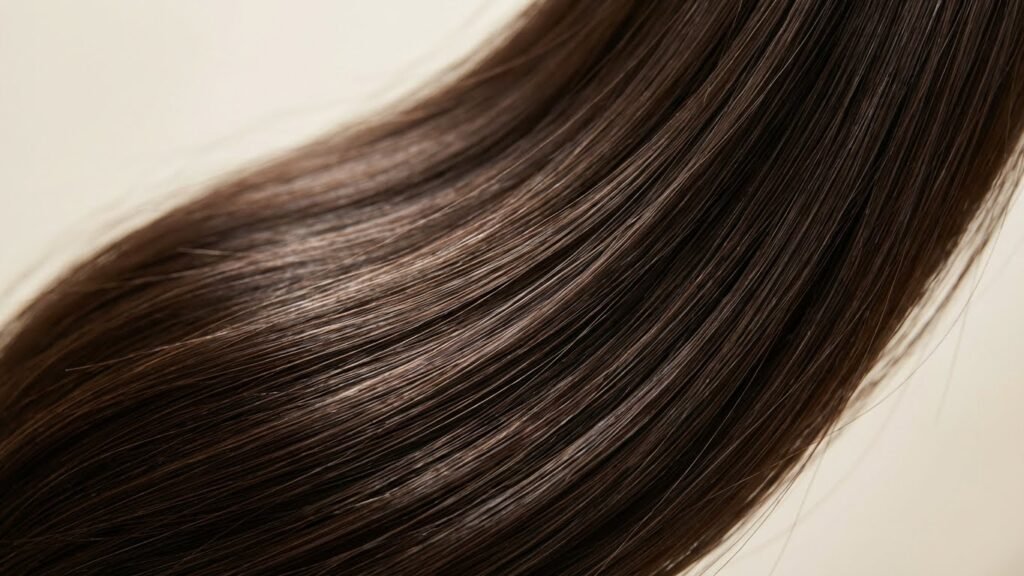
High porosity hair absorbs moisture quickly… then loses it just as fast. This is where a solid high porosity hair routine matters.
Traits
- Frizz-prone
- Dries very fast
- Tangles easily
What Works
- Leave-in conditioners
- Creams + oils to seal
- Protein masks (in moderation)
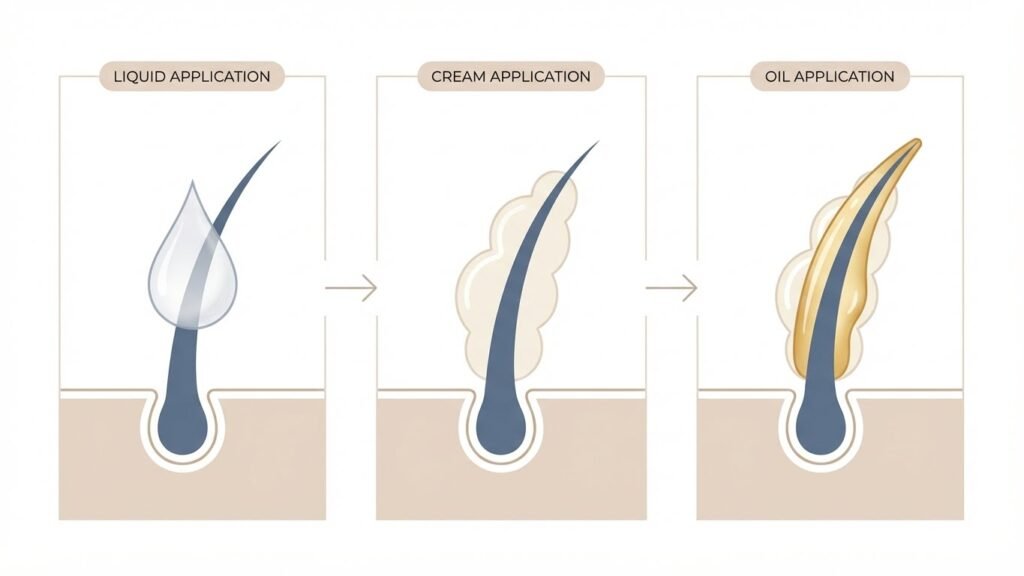
Layering Method (Simple Guide)
- Water or leave-in
- Cream
- Oil or butter to seal
What to Avoid
- Harsh sulfates
- Excessive heat
Product Recommendations by Porosity Level
This is where readers usually convert—so keep it helpful, not pushy.
Low Porosity
- Lightweight leave-ins
- Clarifying shampoos
- Steam treatments
recommended : L’Oreal Paris EverPure shampoo
Medium Porosity
- Balanced conditioners
- Gentle moisturizers
- Lightweight oils like argan
High Porosity
- Rich creams
- Protein-based masks
- Sealing oils (castor, jojoba)
Ingredient Cheat Sheet
- Hydration: aloe, glycerin
- Sealing: shea butter, oils
- Strength: hydrolyzed proteins
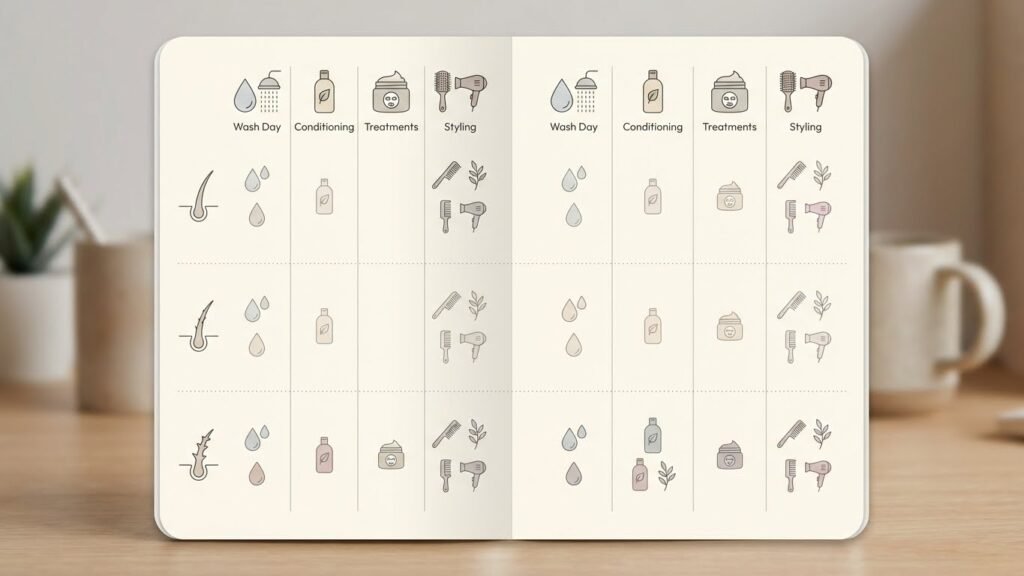
How to Build a Porosity-Friendly Hair Routine
Low Porosity
- Weekly clarify
- Warm-water conditioning
- Lightweight leave-in
Medium Porosity
- Regular wash day
- Occasional deep condition
High Porosity
- Weekly deep conditioning
- Layer moisture + seal
- Monthly protein treatment
Common Mistakes People Make With Hair Porosity
- Overloading hair with oils
- Skipping clarifying washes
- Ignoring weather changes
- Protein overload (or neglect)
- Inconsistent routines
No judgment—we’ve all done at least three of these.
Expert Tips for Managing Hair Porosity Effectively
- Apply products to soaking-wet hair
- Use cooler water to seal cuticles
- Warm conditioners for low porosity hair
- Layer products from lightest to heaviest
- Adjust routine seasonally
FAQs About Hair Porosity
What is the most accurate hair porosity test?
Using multiple tests together gives the best result.
Can your hair porosity change over time?
Yes—heat, coloring, and damage can increase porosity.
Is high porosity hair damaged hair?
Often, but not always. Some people are naturally high porosity.
What products should I avoid based on porosity?
Heavy oils for low porosity; harsh cleansers for high porosity.
Does hair porosity affect curl pattern?
It affects how curls behave, not the pattern itself.
Conclusion — Know Your Porosity, Transform Your Routine
Once you understand your hair porosity, everything clicks. Products stop feeling random. Moisture finally stays put. And your routine starts working with your hair—not against it.
Take the hair porosity test, adjust your products, and give your hair what it’s actually asking for.
Good hair days aren’t magic—they’re informed.