

Why Sensitive Skin Needs a Different Approach
If your skin reacts to almost everything — the new “clean” serum, a mild face wash, even changes in weather — you’re not imagining it. Sensitive skin care isn’t about being high-maintenance; it’s about being strategic.
Studies suggest that nearly 60–70% of women report having sensitive skin at some point in their lives. That’s a lot of redness, stinging, and “why is my face mad at me today?” moments. I’ve been there — standing in a skincare aisle, reading ingredient labels like they’re legal contracts, hoping this time will be different.
The truth? Sensitive skin needs a gentler, more intentional approach. Harsh ingredients, fragrance overload, and overcomplicated routines often do more harm than good. In this guide, I’ll walk you through a calming skincare roadmap — from understanding why your skin reacts, to building a soothing beauty routine with hypoallergenic beauty products that actually work.
You’ll learn practical routines, science-backed ingredients, natural remedies, and wellness habits that help sensitive skin finally relax.
1. Understanding Sensitive Skin (and Why It Reacts the Way It Does)
Sensitive skin isn’t a flaw — it’s usually a signal.
Think of your skin barrier like the roof of your house. When it’s intact, everything inside stays protected. But when shingles are missing? Wind, rain, and debris get in. Similarly, a compromised skin barrier allows irritants to penetrate, triggering inflammation.
Common causes include:
- Fragrance and alcohol exposure
- Over-exfoliation or product overload
- Environmental stressors (cold, heat, pollution)
- Hormonal changes and stress
When the barrier weakens, nerves in the skin become more reactive — resulting in burning, redness, and flare-ups. That’s why anti-inflammatory skincare and hypoallergenic beauty formulas are essential for sensitive skin care.
The goal isn’t to “toughen up” your skin — it’s to calm it down and rebuild resilience.
2. Signs Your Skin Is Sensitive (Quick Self-Check)
Not sure if your skin is sensitive? See how many of these sound familiar:
🔲 Redness that appears easily
🔲 Burning or stinging after applying products
🔲 Tightness even after moisturizing
🔲 Flushing from heat, stress, or spicy food
🔲 Dry patches alongside oiliness
🔲 Breakouts after switching products
🔲 Reactions to fragrance or essential oils
If you checked more than a few, your skin likely benefits from gentle cleansers, fragrance-free skincare, and a simplified routine. Identifying your triggers is the first step toward calmer skin days.
3. Building a Gentle Skincare Routine (Morning + Night)

Sensitive skin thrives on simplicity. Here’s a supportive, no-drama routine you can actually stick to.
Morning Routine
- Gentle cleanser Look for sulfate-free, low-foam formulas.
- Hydrating serum Ingredients like aloe vera or hyaluronic acid soothe without irritation.
- Lightweight moisturizer Choose fragrance-free, barrier-supporting formulas.
- Mineral sunscreen Zinc oxide or titanium dioxide are usually better tolerated.
Night Routine
- Gentle cleanse Avoid double cleansing if your skin feels tight.
- Calming serum (optional) Centella or chamomile help reduce redness.
- Barrier-supporting moisturizer Ceramides are your skin’s best friend.
What to avoid: harsh scrubs, alcohol toners, strong acids, and over-cleansing. When in doubt, less really is more.
4. Choosing the Best Products for Sensitive Skin (What Matters Most)
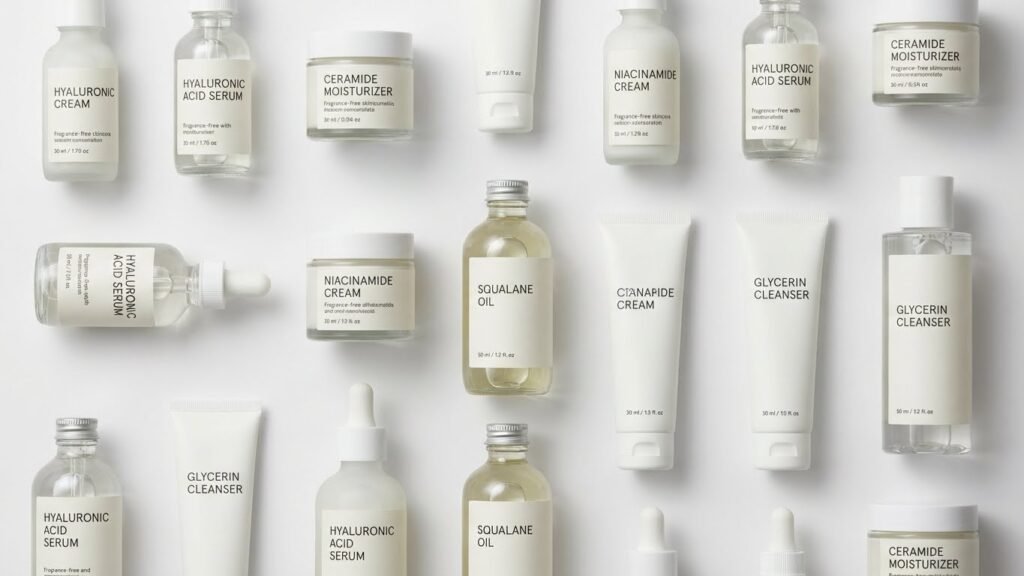
The best products for sensitive skin share a few common traits — and marketing buzzwords don’t always tell the full story.
What “Hypoallergenic” Actually Means
It suggests fewer known irritants — but it’s not regulated. Always read labels.
How to Read Ingredient Lists
Look for:
- Ceramides
- Oat extract
- Squalane
- Glycerin
Avoid:
- Synthetic fragrance
- Dyes
- Denatured alcohol
- Strong exfoliating acids
Example:
| Skin-Friendly | Potentially Irritating |
|---|---|
|
Glycerin
|
Fragrance
|
|
Ceramides
|
Alcohol denat
|
|
Oat extract
|
Citrus oils
|
5. Anti-Inflammatory Skincare Ingredients That Reduce Redness
These anti-inflammatory skincare heroes are backed by science and loved by sensitive skin:
- Centella asiatica (Cica): Repairs barrier, calms redness
- Colloidal oatmeal: Clinically proven to reduce itching
- Chamomile: Soothing and antioxidant-rich
- Aloe vera: Hydrates and cools irritation
- Niacinamide (low %): Strengthens barrier, improves tolerance
- Green tea extract: Fights inflammation and oxidative stress
Look for formulas that combine 1–2 of these — not all of them at once.
6. Plant-Based and Natural Remedies for Skin Irritation

When chosen wisely, plant-based skincare can support calming skincare routines.
Gentle options include:
- Fresh aloe vera gel for flare-ups
- Honey masks (10 minutes, rinse gently)
- Cold chamomile tea compresses
- Oatmeal paste for itchy patches
- Alcohol-free rose water
 Always patch-test first. Natural doesn’t automatically mean non-irritating — especially for reactive skin.
7. Gentle Wellness Habits That Support Sensitive Skin

Your skincare routine doesn’t end at the sink.
Support sensitive skin care by:
- Reducing inflammatory foods (excess sugar, alcohol)
- Staying hydrated
- Prioritizing sleep (barrier repair happens overnight)
- Managing stress with breathing or rituals
- Using a humidifier in dry environments
- Avoiding long, hot showers
Calm skin often reflects a calmer nervous system.
8. Sensitive Skin Product Routine: What to Use (and What to Avoid)
| Use These | Avoid These |
|---|---|
|
Fragrance-free moisturizers
|
Scrubs
|
|
Mineral sunscreen
|
Alcohol-heavy toners
|
|
Barrier creams (ceramides)
|
Strong acids
|
|
Light hydrating serums
|
Essential oils (for many)
|
This side-by-side clarity helps skimmers — and saves your skin.
9. Common Sensitive Skin Mistakes (and How to Avoid Them)
- Over-exfoliating
- Switching products too often
- Using makeup wipes
- Over-cleansing
- Skipping patch tests
- Using heavily fragranced beauty items
Consistency beats experimentation — every time.
10. Expert Tips for a Soothing, Non-Irritating Beauty Routine
- Introduce one new product at a time
- Moisturize on damp skin
- Use lukewarm water
- Avoid physical scrubs
- Apply barrier cream before actives
- Patch-test behind ear or inner arm
These small shifts make a big difference in calming skincare success.
FAQs About Sensitive Skin Care
What is the best skincare routine for sensitive skin?
A simple routine with gentle cleansers, fragrance-free moisturizer, and mineral sunscreen.
Which ingredients should sensitive skin avoid?
Fragrance, alcohol denat, dyes, and strong acids.
Are natural products better for sensitive skin?
Not always. Some natural ingredients can still irritate.
Is fragrance-free the same as hypoallergenic?
No. Fragrance-free removes scent; hypoallergenic suggests fewer irritants.
Can sensitive skin use retinol?
Yes — cautiously, low strength, and buffered with moisturizer.
How do I calm irritation quickly?
Stop actives, apply a barrier cream, and use cool compresses.
Conclusion — Sensitive Skin Thrives With Gentle Care and Consistency
Sensitive skin doesn’t need fixing — it needs respect. With the right calming skincare, thoughtful product choices, and supportive wellness habits, your skin can become more resilient, comfortable, and predictable.
Start by simplifying your routine. Choose fragrance-free, barrier-supporting products. Introduce changes slowly. And remember: consistency beats intensity.
Your skin will thank you — quietly, calmly, and glowingly.