
Why Personalized Hair Care Matters
Here’s a sobering truth: 73% of women admit they’ve been using the same hair products for years without considering whether they actually work for their hair type. Sound familiar?
I used to be one of those people, grabbing whatever shampoo was on sale and wondering why my hair looked like I’d stuck my finger in an electrical socket half the time. The lightbulb moment came when I realized that my best friend’s holy-grail curly hair routine was turning my fine, straight hair into a greasy mess.
The reality is this: no two heads of hair are the same. Your hair has its own personality, quirks, and needs—just like you do. A truly effective personalized hair care routine isn’t about following the latest TikTok trend or copying your favorite influencer’s shelf. It’s about understanding what makes your hair tick and building a hair care routine that works with your natural texture, not against it.
Whether you’re dealing with stubborn frizz, lifeless locks, an oily scalp, or damage from years of heat styling, the secret isn’t finding one miracle product. It’s creating a system that addresses your hair’s unique combination of characteristics and concerns.
Ready to finally give your hair what it’s been asking for? Let’s dive in.

Understanding Your Hair Type and Scalp Condition
Before you can build the perfect routine, you need to become a detective for your own hair. Think of this as your hair’s personality profile—once you crack the code, everything else falls into place.
Hair Texture: Your Natural Blueprint
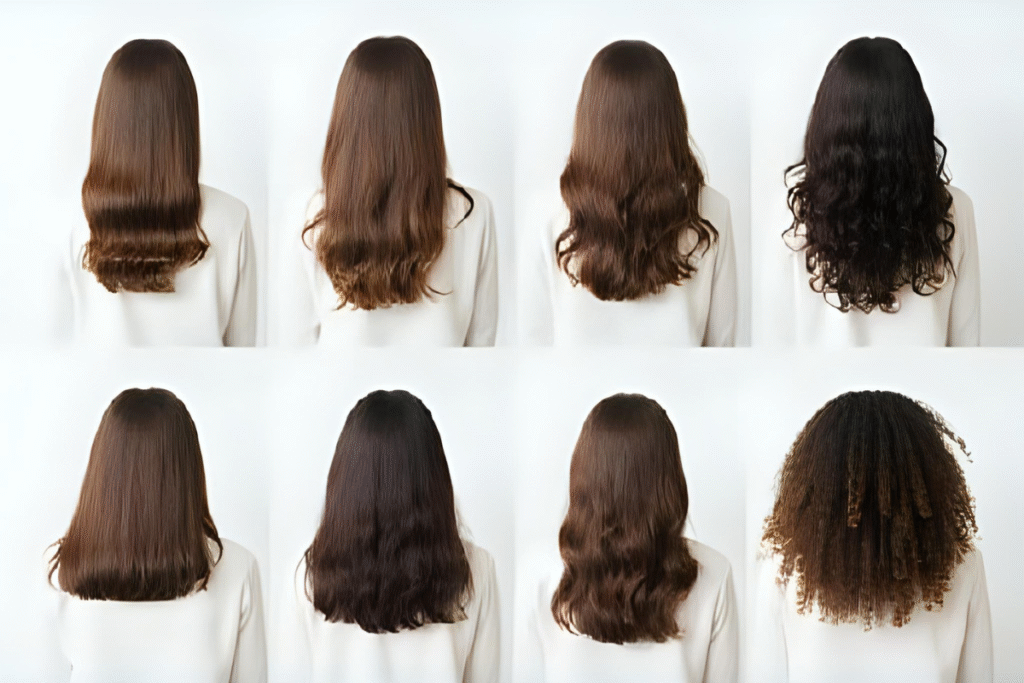
Your hair texture is determined by the shape of your hair follicle, and it’s the foundation of everything else:
- Straight hair grows from circular follicles and tends to be naturally shinier but can look greasy faster
- Wavy hair has a slight S-pattern and often struggles with frizz in humidity
- Curly hair forms spirals and craves moisture to maintain its shape
- Coily hair has tight zigzag patterns and is the most fragile but also the most versatile
Hair Density: It’s Not What You Think
Density isn’t about how much hair you have total—it’s about the thickness of each individual strand:
Fine hair feels soft and silky but can be easily weighed down by heavy products. If you can barely feel a single strand between your fingers, you’ve got fine hair. This is crucial for hair care for fine hair because what works for thick hair will likely make yours look flat and lifeless.
Medium hair has more resilience and can handle a wider range of products without going limp.
Thick hair feels coarse and substantial. Each strand has more structure, so it can handle richer, heavier formulations.
Scalp Condition: The Foundation You Can’t Ignore
Your scalp is literally the foundation your hair grows from, yet most people ignore it completely. Here’s how to read the signs:
Oily scalp means your hair looks greasy within 24-48 hours of washing. Hair care for oily scalp focuses on balancing oil production without over-stripping.
Dry scalp feels tight, itchy, or flaky. Hair care for dry hair starts at the scalp with gentle, moisturizing formulas.
Sensitive scalp reacts to fragrances, sulfates, or even weather changes with irritation or breakouts.
Pro tip: Your scalp condition can be completely different from your hair’s needs. You might have an oily scalp but dry ends—and that’s totally normal!
Core Hair Care Steps: Build Your Routine Layer by Layer
Think of your hair care routine like getting dressed—you wouldn’t put on a coat without a shirt underneath, right? These five hair care steps create the foundation for healthy hair, no matter your type.
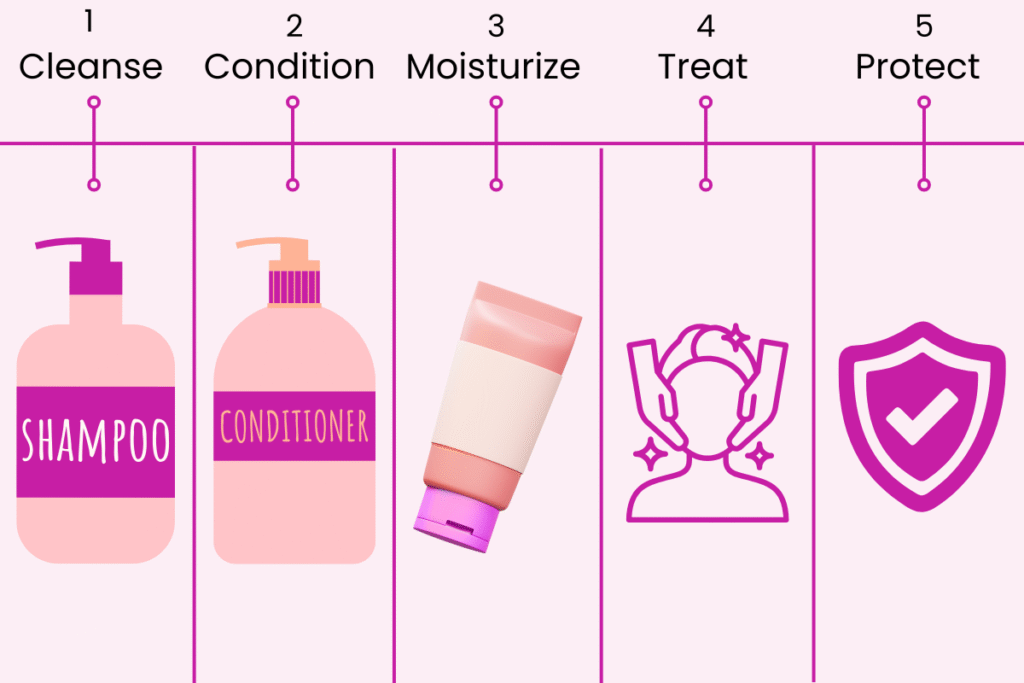
Step 1: Cleanse (The Foundation)
Shampoo isn’t one-size-fits-all. The key is matching your cleanser to your scalp, not your hair ends:
- Oily scalp: Look for clarifying shampoos with salicylic acid or tea tree oil
- Dry scalp: Choose sulfate-free, cream-based cleansers with ceramides
- Sensitive scalp: Opt for fragrance-free, hypoallergenic formulas
- Color-treated hair: Use color-safe shampoos with UV protection
Step 2: Condition (The Moisture Layer)
Conditioner should target your hair’s mid-lengths and ends—never the scalp. The rule of thumb:
- Fine hair: Lightweight, volumizing conditioners applied sparingly
- Thick/coarse hair: Rich, creamy conditioners with butters and oils
- Damaged hair: Protein-rich conditioners to rebuild hair structure
- Curly hair: Leave-in conditioners for extra moisture retention
Step 3: Moisturize (The Hydration Boost)
This is where daily hair care tips really shine. Leave-in treatments aren’t optional for most hair types:
Hair oils for coarse, dry, or chemically-treated hair
Lightweight serums for fine hair that needs shine without weight
Cream leave-ins for curly and coily hair that needs all-day moisture
Scalp treatments for anyone dealing with dryness or sensitivity
Step 4: Treat (The Problem Solver)
Weekly treatments target specific concerns:
- Deep conditioning masks for dry or damaged hair
- Protein treatments for hair that’s lost elasticity from chemical processing
- Scalp exfoliants for buildup or flakiness
- Bond builders for hair that’s been bleached or heat-damaged
Step 5: Protect (The Shield)
Protection is non-negotiable in today’s world:
- Heat protectant before any hot tool use (yes, even blow dryers)
- UV protection if you spend time outdoors
- Silk or satin pillowcases to reduce friction while you sleep
- Microfiber towels instead of regular terry cloth to prevent breakage
Customize for Your Hair Type & Needs
Here’s where the magic happens—taking those foundational steps and tailoring them to your hair’s specific personality. This is true personalized hair care in action.
Best Hair Care for Curly Hair
Curly hair is thirsty hair. The spiral shape makes it harder for natural oils to travel down the hair shaft, which is why the best hair care for curly hair revolves around hydration and gentle handling.
The Curly Method:
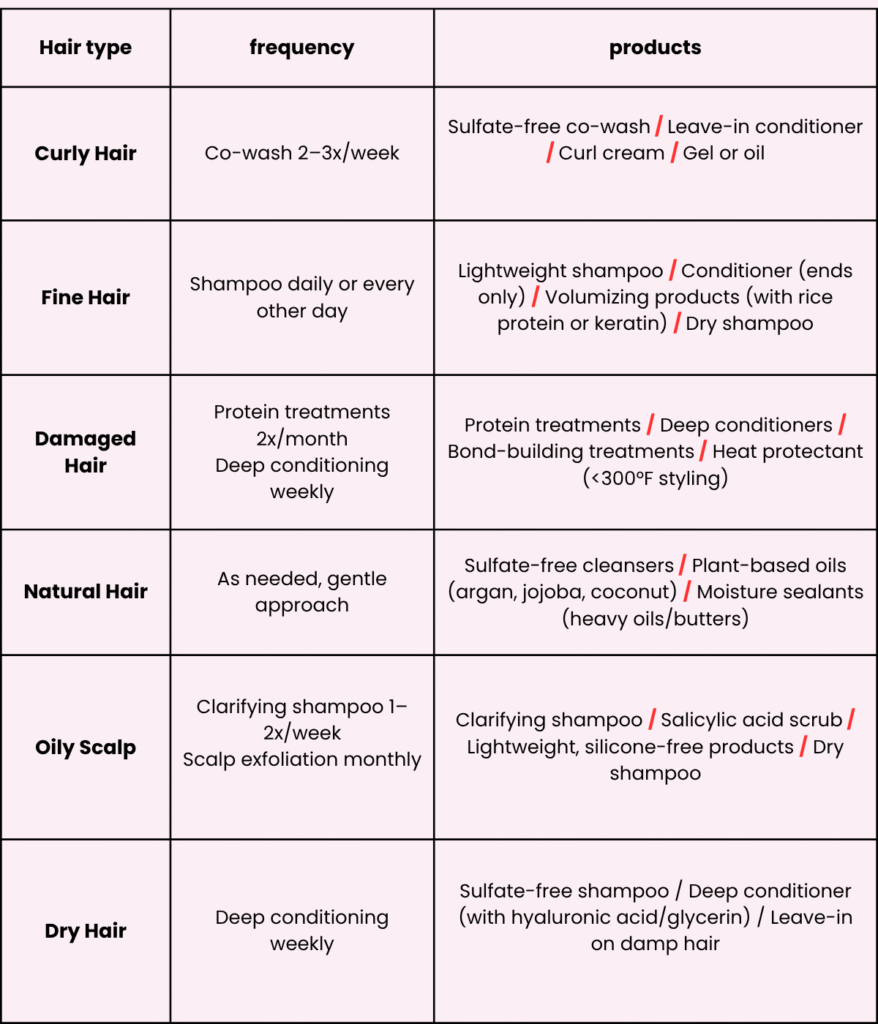
- Co-wash 2-3 times per week instead of daily shampooing to avoid stripping natural oils
- Layer moisture from lightest to heaviest: leave-in conditioner, curl cream, then gel or oil
- Protein-moisture balance is crucial—too much of either can cause limp or brittle curls
- Plop, don’t rub your hair dry with a microfiber towel or cotton t-shirt
- Sleep on silk to prevent frizz and preserve curl patterns
Pro insight: The “pineapple” method (loosely tying curls at the very top of your head) prevents overnight crushing.
Hair Care for Fine Hair
Fine hair is like cashmere—beautiful but delicate. The goal is adding body and strength without weighing it down.
The Fine Hair Formula:
- Shampoo daily or every other day to prevent oil buildup that makes hair look flat
- Apply conditioner only to ends, never the roots
- Use volumizing products with rice protein or keratin for structure
- Avoid heavy oils and butters that will make hair look greasy
- Dry shampoo is your friend for extending wash days and adding texture
Hair Care for Damaged Hair
Damaged hair needs repair work before it can be truly healthy. Think of it as hair physical therapy.
The Repair Protocol:
- Protein treatments twice monthly to rebuild hair structure
- Deep conditioning weekly to restore moisture and elasticity
- Trim every 6-8 weeks to prevent split ends from traveling up
- Heat styling breaks or temperature under 300°F with protectant
- Bond-building treatments for chemically processed hair
Natural Hair Care Routine
Natural hair (chemically unprocessed) can handle gentler, more natural hair care routine approaches:
- Sulfate-free cleansers to preserve natural oils
- Plant-based oils like argan, jojoba, or coconut for deep conditioning
- Protective styling to minimize manipulation and breakage
- Gentle detangling with wide-tooth combs on wet, conditioned hair
- Moisture sealing with heavier oils or butters on damp hair
Hair Care for Oily Scalp
Hair care for oily scalp requires a delicate balance—you need to control oil without triggering more production.
The Balance Act:
- Clarifying shampoo 1-2 times per week to remove buildup
- Scalp exfoliation monthly with salicylic acid or physical scrubs
- Lightweight, silicone-free products that won’t add to the greasiness
- Dry shampoo strategically on non-wash days
- Don’t over-brush as it distributes oils down the hair shaft
Hair Care for Dry Hair
Hair care for dry hair is all about moisture retention and gentle handling.
The Hydration Strategy:
- Sulfate-free shampoos to avoid stripping natural oils
- Weekly deep conditioning with ingredients like hyaluronic acid or glycerin
- Leave-in treatments applied to damp hair to lock in moisture
- Protective styling to minimize environmental damage
- Humidifier in your bedroom to prevent overnight moisture loss
Gender-Specific Considerations (Men vs. Women)
Let’s bust a myth right now: hair doesn’t care about your gender, but your lifestyle and goals probably differ. Here’s how hair care for men and hair care for women typically vary in practice.
Hair Care for Men
Men’s hair routines tend to be more straightforward, but that doesn’t mean less effective. The focus is usually on scalp health and simplicity.
The Male Approach:
- Shorter styles mean more frequent washing (daily is often fine)
- Scalp health takes priority since shorter hair shows scalp condition more
- Multi-tasking products like 2-in-1 shampoo-conditioners can work for shorter hair
- Thinning prevention becomes relevant earlier, with ingredients like saw palmetto or caffeine
- Less heat styling damage but more environmental exposure
Hair Care for Women
Women’s routines often involve more steps because the goals are typically more complex—length retention, color protection, and styling versatility.
The Female Focus:
- Length protection requires more conditioning and protective measures
- Color maintenance adds another layer of specialized products
- Heat styling damage from frequent blow-drying, curling, and straightening
- Hormonal fluctuations affect hair texture and growth patterns
- Styling product buildup requires more thorough cleansing
Celebrity stylist Maria Rodriguez notes: “The biggest difference I see isn’t gender-based—it’s goal-based. Someone growing their hair out needs different care than someone maintaining a pixie cut, regardless of gender.”
Common Mistakes That Sabotage Your Routine
Even with the right products, these daily hair care tips can make or break your results. Avoid these routine-killers:
• Overwashing or Under-washing
Your wash frequency should match your scalp type, not your schedule. Oily scalps need daily cleansing; dry scalps might only need washing twice a week.
• Using the Wrong Products for Your Scalp
If your scalp is oily but your ends are dry, use a clarifying shampoo on roots and a moisturizing conditioner on ends. Don’t try to find one product that does both.
• Skipping Heat Protection
Every degree over 300°F without protection is causing cumulative damage. Even air-drying can benefit from leave-in UV protection.
• Not Trimming Regularly
Split ends don’t heal themselves—they travel up the hair shaft and cause more breakage. Trim every 6-12 weeks depending on your hair’s health.
• Product Overload Without Clarifying
More products don’t equal better results. Build up from styling products, conditioners, and treatments can make hair look dull and lifeless. Use a clarifying shampoo weekly if you use multiple styling products.
• Rough Towel Drying
Terry cloth towels create friction that leads to frizz and breakage. Pat or squeeze hair gently with microfiber towels or old t-shirts.
• Ignoring Your Hair’s Changing Needs
Hormones, seasons, age, and chemical treatments all change your hair’s needs. What worked last year might not work now.
Expert Tips to Level Up Your Hair Routine
Ready to take your natural hair care routine from good to great? These professional insights make all the difference:
Consistency Trumps Expensive Products
A $10 routine used consistently will outperform a $100 routine used sporadically. Your hair responds to regular care, not price tags.
Scalp Massage for Growth
Five minutes of gentle scalp massage daily increases blood circulation and can improve hair thickness over time. Use your fingertips, not nails, in circular motions.
Rotate Your Shampoos
Even the best shampoo can cause buildup over time. Alternate between your regular shampoo and a clarifying formula weekly to keep hair responsive to products.
Temperature Matters
Rinse conditioner with cool water to seal the hair cuticle and add shine. Save hot water for shampooing, when you want the cuticle open for cleansing.
The 80% Rule
Let hair air-dry to about 80% before using any heat styling tools. This dramatically reduces damage while cutting down styling time.
Weekly Reset
One day per week, skip all styling products and just use shampoo and conditioner. This gives your hair a break from buildup and lets you assess its natural condition.
Trichologist Dr. Sarah Chen explains: “The most successful hair routines I see aren’t the most complicated—they’re the most consistent. Small daily actions compound into big results over months.”
Commit to Your Hair’s Best Life
Building a personalized hair care routine isn’t about perfection—it’s about understanding. Once you know your hair’s personality, everything else becomes so much clearer. You’ll stop wasting money on products that don’t work and start seeing real improvements in your hair’s health and appearance.
The best hair care routine is the one that fits your lifestyle, addresses your specific concerns, and makes you feel confident every time you look in the mirror. It doesn’t have to be complicated, expensive, or time-consuming. It just has to be yours.
Your hair has been trying to tell you what it needs—now you finally know how to listen.
Ready to start your personalized hair journey? Share your hair transformation with us on Instagram or comment down below, we love seeing your results!
FAQs About Personalized Hair Care
How often should I wash my hair?
It depends on your scalp type, not your hair type. Oily scalps need daily washing, normal scalps every 2-3 days, and dry scalps 1-2 times per week. Your hair will tell you—if it looks greasy, wash it.
Can I mix and match products from different brands?
Absolutely! Personalized hair care often means combining products from different lines. Focus on ingredients and your hair’s needs rather than brand loyalty.
What if I have multiple hair concerns?
Address them in order of priority. If you have damage and dryness, fix the damage first with protein treatments, then focus on moisture. Trying to tackle everything at once often backfires.
How long before I see results from a new routine?
Hair grows about half an inch per month, so significant changes take 2-3 months to become visible. However, you should notice improvements in texture and manageability within 2-4 weeks.
Is expensive always better for best hair care for curly hair or other specific types?
Not necessarily. Some drugstore brands have excellent formulations. Focus on ingredients and your hair’s response rather than price point.