
Why Dandruff Is Still a Problem in 2026 (But Easier to Treat)
You wash your hair. It looks fresh. It smells expensive.
Then you step into natural light… and boom — flakes.
If you’re frustrated, you’re in good company. Research continues to show that nearly 1 in 2 adults experience dandruff at some point. And yes — even in 2026, with all our beauty tech and AI-powered skincare diagnostics, dandruff is still stubbornly common.
But here’s the shift: treatment has evolved.
The best anti dandruff shampoo 2026 formulas are smarter, more microbiome-aware, and far less harsh than what we used even a few years ago. Thanks to next-generation antifungals, gentler actives, and scalp barrier science, the modern new dandruff treatment approach focuses on long-term balance — not just blasting flakes away temporarily.
If you’re tired of recurring flare-ups every winter, every stress cycle, or every hormonal shift, this guide will walk you through what actually works now.
1. What Actually Causes Dandruff? (It’s More Than Dry Scalp)
Let’s clear up the biggest myth first.
Dandruff is rarely just “dry scalp.”
In most cases, it’s linked to an overgrowth of Malassezia, a yeast that naturally lives on your scalp. When it feeds on oils (sebum), it can trigger inflammation. The result? Itchiness, redness, and visible flakes.
This condition overlaps with seborrheic dermatitis hair, which is essentially a more persistent or inflamed version of dandruff.
And here’s the important part: simply moisturizing won’t solve it.
That’s why hydrating masks alone don’t fix chronic flakes.
What you usually need is an antifungal shampoo hair formula that reduces yeast overgrowth while calming inflammation.
Historically, zinc pyrithione was the go-to ingredient. While still available in U.S. formulas, many brands have shifted in 2026 due to global regulatory changes and consumer demand for gentler options.
Dry Scalp vs Dandruff: Quick Comparison
| Dry Scalp | Dandruff |
|---|---|
|
Small, powdery flakes |
Larger, oily flakes |
|
Tight feeling |
Itchy, inflamed scalp |
|
Itchy, inflamed scalp |
Caused by yeast + inflammation |
|
Improves with hydration |
Requires antifungal treatment |
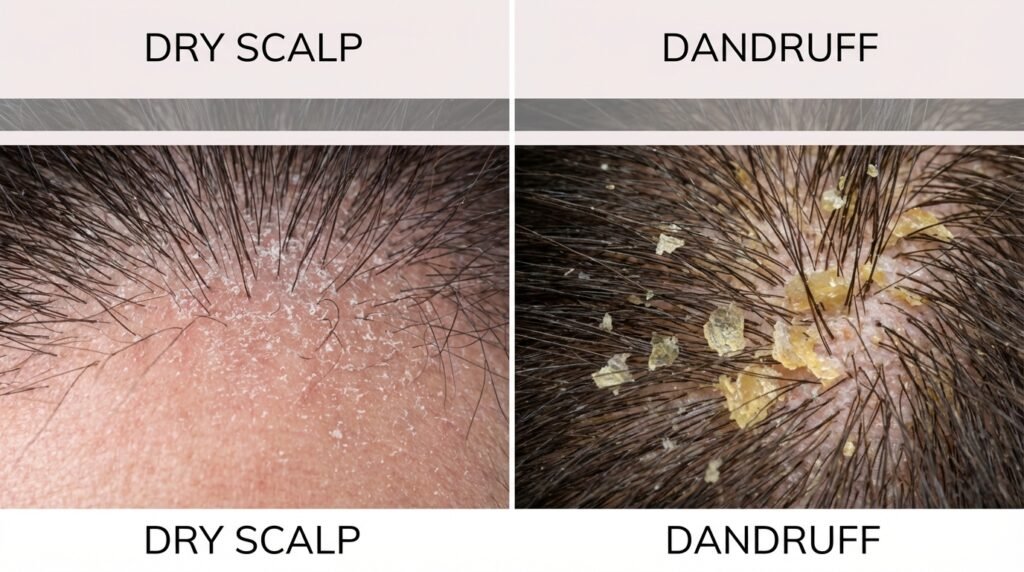
Understanding this difference changes everything.
2. Scalp Psoriasis vs Dandruff: How to Tell the Difference
Misdiagnosis is one of the biggest reasons treatment fails.
The confusion between scalp psoriasis vs dandruff is extremely common — but they require different management strategies.
Here’s a simplified comparison:
| Symptom | Dandruff / Seborrheic Dermatitis Hair | Scalp Psoriasis |
|---|---|---|
|
Flake type |
Yellowish, greasy |
Thick, silvery |
|
Itch |
Mild–moderate |
Often intense |
|
Redness |
Subtle inflammation |
Bright red plaques |
|
Location |
Primarily scalp |
Scalp + elbows, knees, body |
|
Treatment |
Antifungal shampoos |
Often prescription meds |
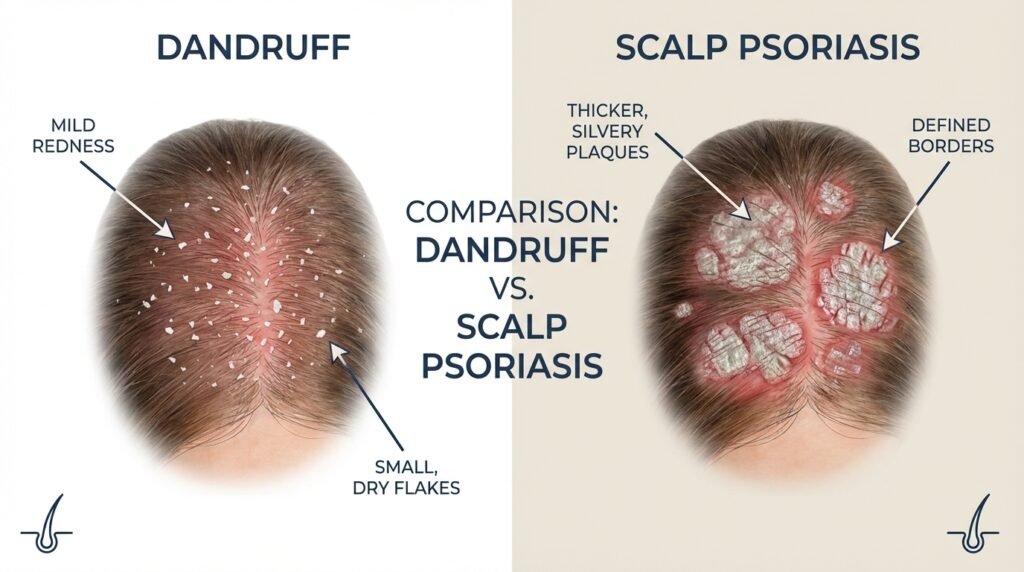
If flakes extend beyond your scalp or appear as thick crusted patches, see a dermatologist.
3. The Biggest Changes in Dandruff Treatment in 2026
The biggest evolution in 2026? Precision + barrier protection.
We’re no longer attacking the scalp aggressively. We’re restoring balance.
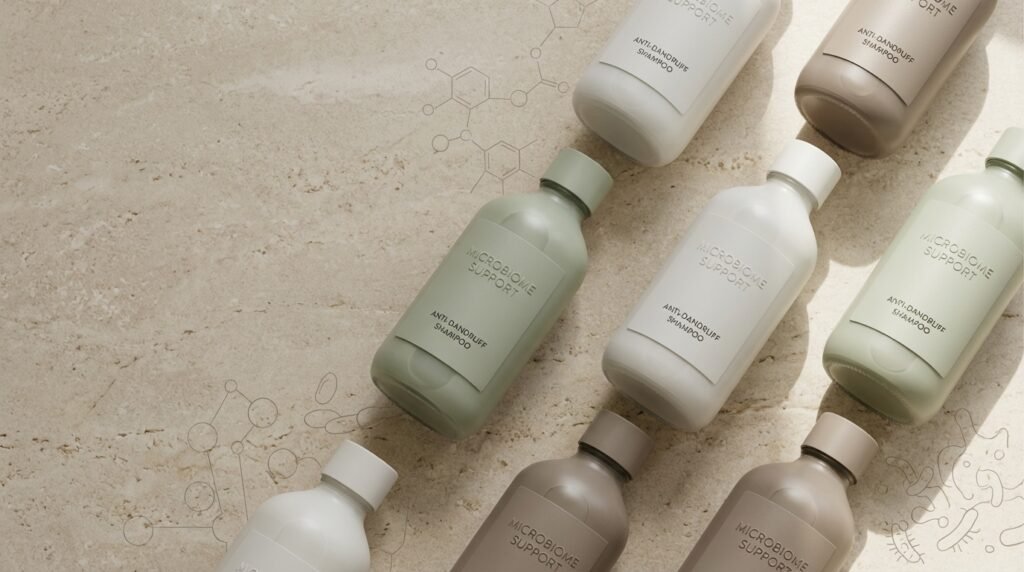
A. Microbiome-Balancing Formulas
Modern new dandruff treatment formulas now include:
- Prebiotics
- Postbiotics
- Barrier-supporting ceramides
- Amino-acid surfactants
The goal: regulate yeast while preserving scalp integrity.
B. Next-Generation Antifungals
Ketoconazole remains powerful, but refinements in delivery systems reduce dryness.
You’ll also see:
- Ciclopirox
- Liposomal antifungal delivery
- Botanical-derived antifungal complexes
These innovations make today’s antifungal shampoo hair formulas more targeted and tolerable.
C. Ingredient Shifts Beyond Zinc Pyrithione
While zinc pyrithione is still available in the U.S., 2026 trends favor alternatives like:
- Piroctone Olamine
- Climbazole
- Plant-based antifungal extracts
Piroctone olamine in particular is considered the breakout ingredient for sensitive scalps this year.
Innovation is about smarter formulations — not stronger irritation.
4. Best Active Ingredients That Actually Work in 2026
Let’s break down what’s genuinely effective.
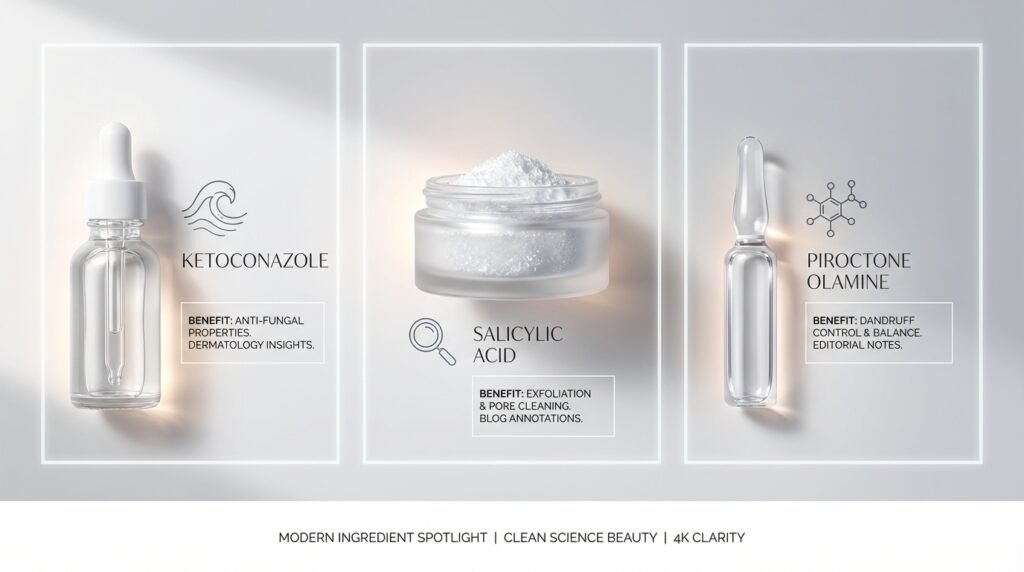
1. Ketoconazole
Best for: Persistent seborrheic dermatitis hair
How it works: Disrupts fungal cell membranes
Use: 2–3x weekly
Still dermatologist gold standard.
2. Salicylic Acid
Best for: Thick scaling
How it works: Dissolves buildup
Use: 1–3x weekly
Pair with a hydrating conditioner.
3. Selenium Sulfide
Best for: Oily scalp + rapid recurrence
How it works: Slows yeast turnover
Use: Twice weekly
Strong but effective.
4. Piroctone Olamine (2026 Favorite)
Best for: Sensitive scalp
How it works: Antifungal with lower irritation risk
Use: Regular use
Gentler alternative to zinc pyrithione.
5. Coal Tar
Best for: Severe scaling
How it works: Slows cell turnover
Use: As directed
Less trendy — still clinically useful.
5. How to Choose the Best Anti Dandruff Shampoo in 2026
Shopping for the best anti dandruff shampoo 2026 isn’t about branding — it’s about ingredients.
Quick Match Guide
- Oily, itchy scalp → Ketoconazole-based antifungal shampoo hair
- Thick flakes → Salicylic acid
- Sensitive scalp → Piroctone olamine + soothing botanicals
- Chronic flares → Dermatologist-strength formula
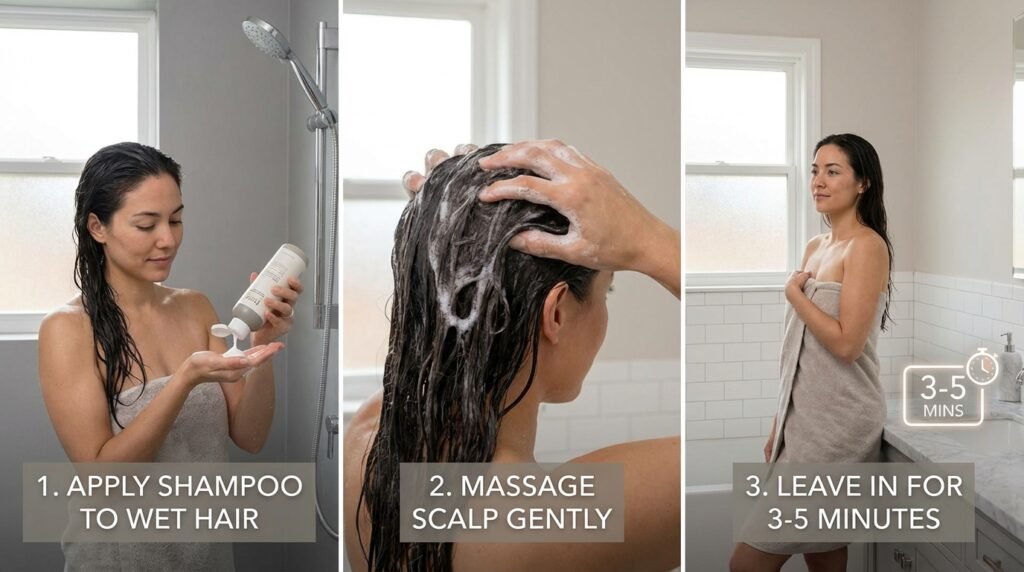
Application Tips
- Wash 2–3x weekly
- Leave on for 3–5 minutes
- Stay consistent for 4 weeks
- Rotate actives if needed
6. Do Dandruff Home Cures Actually Work?
Search volume for dandruff home cure remains high in 2026 — but let’s be honest.
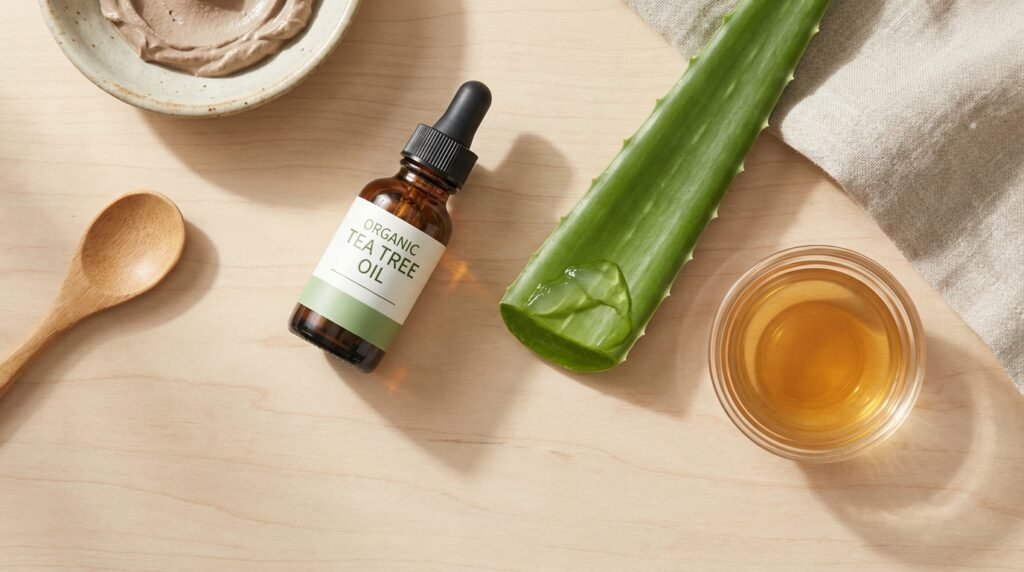
What Might Help
- Tea tree oil (mild antifungal)
- Apple cider vinegar (temporary pH balance)
- Aloe vera (soothing)
What’s Overhyped
- Coconut oil alone
- Baking soda
These don’t treat seborrheic dermatitis hair long-term.
Supportive? Maybe. Curative? No.
7. Common Mistakes That Keep Dandruff Coming Back
Even the best antifungal shampoo hair won’t work if you:
- Rinse too quickly
- Quit after one week
- Only treat visible flakes
- Ignore stress triggers
- Misdiagnose scalp psoriasis vs dandruff
Consistency > novelty.
8. When to See a Dermatologist
Seek professional help if you notice:
- Thick crusted plaques
- Hair thinning
- Redness spreading beyond scalp
- No improvement after 4 weeks
You may be dealing with severe seborrheic dermatitis hair or scalp psoriasis requiring prescription care.
Responsible care builds trust — and results.
Clear Scalp Is Possible in 2026
Dandruff isn’t disappearing in 2026 — but managing it has never been more effective.
From ketoconazole to piroctone olamine, modern new dandruff treatment options focus on microbiome balance and long-term scalp health. The best anti dandruff shampoo 2026 is the one matched to your scalp type and used consistently.
Diagnosis matters.
Contact time matters.
Consistency matters.
Clear shoulders. Calm scalp. Real confidence.
You don’t have to live with flakes anymore.
FAQ (Featured Snippet Optimized)
What is the best anti dandruff shampoo in 2026?
The best anti dandruff shampoo 2026 depends on your scalp type. Ketoconazole works for persistent yeast-related dandruff, while piroctone olamine suits sensitive scalps.
Is zinc pyrithione still safe in 2026?
Zinc pyrithione remains available in U.S. products but is restricted in some regions. Many brands now use alternatives like piroctone olamine.
What’s the difference between scalp psoriasis vs dandruff?
Dandruff produces oily flakes and mild inflammation. Scalp psoriasis causes thick, silvery plaques and often extends beyond the scalp.
How long does antifungal shampoo take to work?
Most antifungal shampoo hair formulas show improvement within 2–4 weeks with proper contact time.
Can dandruff be cured permanently?
Dandruff is typically chronic but manageable with consistent treatment.