Why Mature Skin Needs a Different Makeup Approach
Have you ever applied the same foundation you’ve loved for years—only to catch a glimpse in the mirror and think, Why does this suddenly look cakey?
You’re not imagining things. As our skin changes, our makeup needs change too.
Makeup for mature skin isn’t about covering up or “fixing” age. It’s about working with your skin—its texture, its glow, its character. Fine lines, dryness, and subtle loss of elasticity can cause traditional formulas to settle into wrinkles instead of smoothing them out. The good news? The right anti-aging makeup products can make skin look fresher, softer, and more radiant than ever.
In this guide, I’ll walk you through why makeup behaves differently on aging skin—and exactly how to choose the best makeup for wrinkles, from foundation to blush, without losing that natural, confident look.
What Changes in Skin as We Age (and How Makeup Interacts With It)
Understanding what’s happening beneath the surface makes smarter makeup choices feel obvious—not overwhelming.
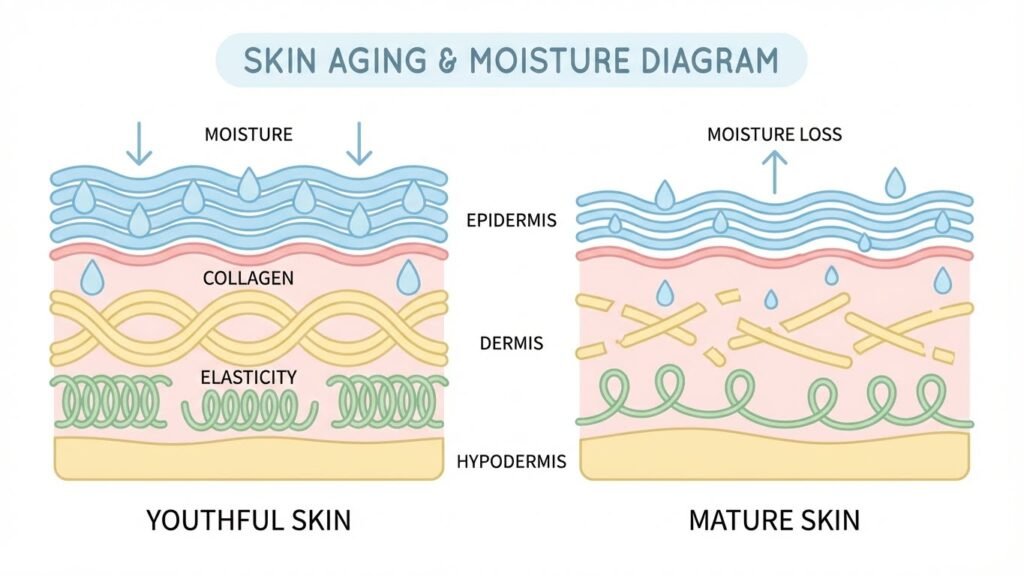
As we age, a few key shifts affect how makeup sits on the skin:
- Loss of moisture: Skin produces less oil, causing makeup to cling to dry patches and settle into lines
- Reduced collagen & elasticity: Less “bounce” means texture is more visible
- Uneven tone & dullness: Hyperpigmentation and redness become more noticeable
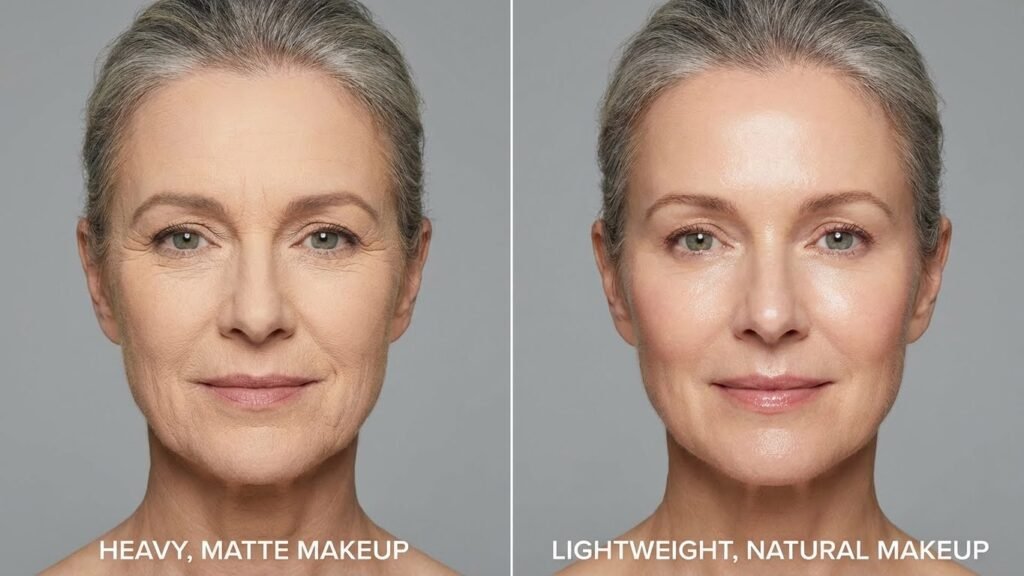
Dermatologists often note that formulas matter more than coverage at this stage. Heavier products exaggerate texture, while flexible, hydrating ones move with your skin.
Key Principles of Makeup for Mature Skin (Before Products)
Before buying anything new, lock in these foundational rules. Technique beats trends—every time.
The Golden Rules
- Hydration comes first: Makeup can’t look smooth on dehydrated skin
- Light layers > heavy coverage: Thick makeup ages the face instantly
- Creams usually beat powders: They melt into skin instead of sitting on top
- Soft glow over flat matte: A little luminosity = youthful freshness
Think of your makeup like clothing: stiff, heavy fabrics show every crease; soft, fluid ones drape beautifully. The same logic applies to natural makeup for 50+.
Foundation for Mature Skin: What Actually Works
This is where most frustration happens—and where small changes make a huge difference.
A. Best Foundation Types for Mature Skin
Look for:
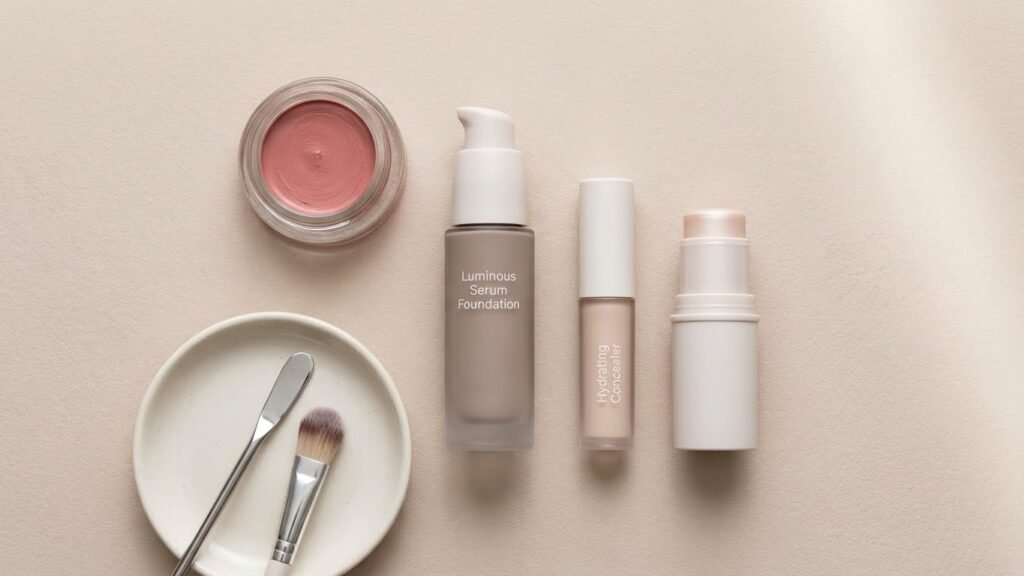
- Liquid foundations with hydrating ingredients
- Serum foundations for sheer, skin-like coverage
- Tinted moisturizers for everyday freshness
- Light cream foundations with flexible wear
These formulas even tone without freezing your face in place. (shop a hydrating foundation that won’t settle into fine lines)
B. What to Avoid
- Heavy matte formulas
- Fast-drying, full-coverage foundations
- Anything that feels tight within minutes
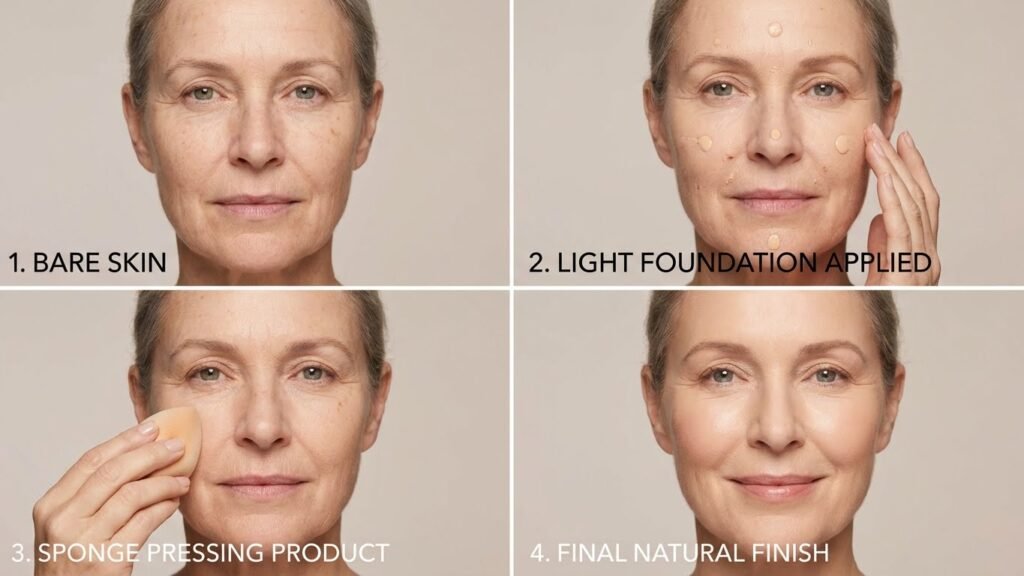
C. Application Tips That Matter
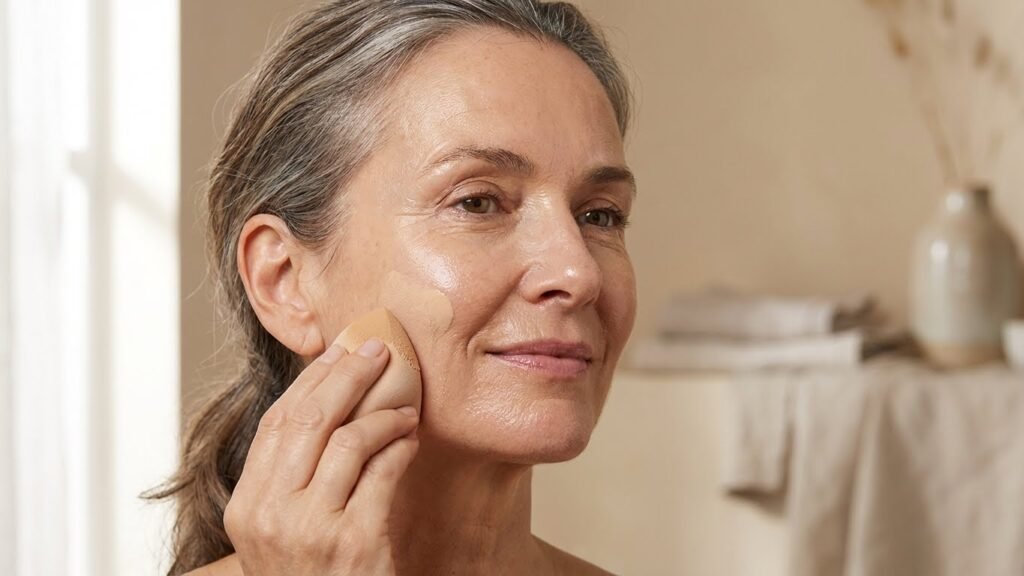
- Use a damp sponge, not a dry brush
- Press, don’t drag, product into skin
- Apply less than you think—then spot-correct
Why this works: pressing keeps product on the surface instead of pushing it into lines.
Best Anti-Aging Makeup Products by Category
Instead of chasing hype, focus on product categories that consistently flatter mature skin.
Best Primers for Fine Lines
Look for:
- Hydrating, silicone-light formulas
- Ingredients like glycerin, hyaluronic acid
(Check out a smoothing primer that softens fine lines instantly)
Best Concealers That Don’t Crease
- Lightweight, serum-style concealers
- Apply only where needed—not wall-to-wall
(discover a crease-resistant concealer that still looks like skin)
Best Blush Formulas
- Cream blushes > powders
- Soft peach, rose, or muted berry tones
(Shop a cream blush that gives a natural, youthful flush)
Best Highlighters for Mature Skin
- Liquid or balm textures
- Avoid chunky shimmer—think sheen, not sparkle
Natural Makeup for 50+: How to Get a Youthful, Effortless Look
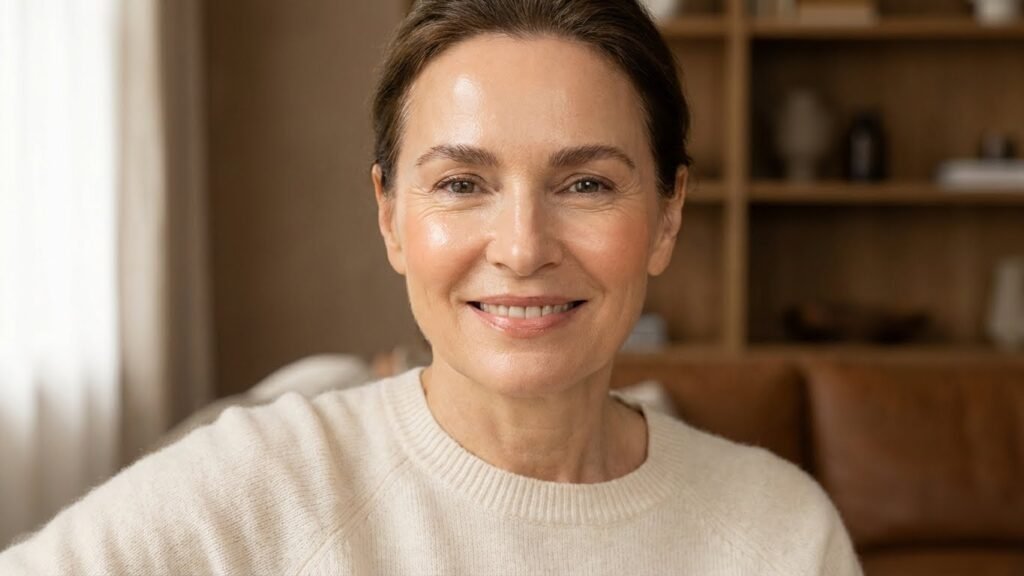
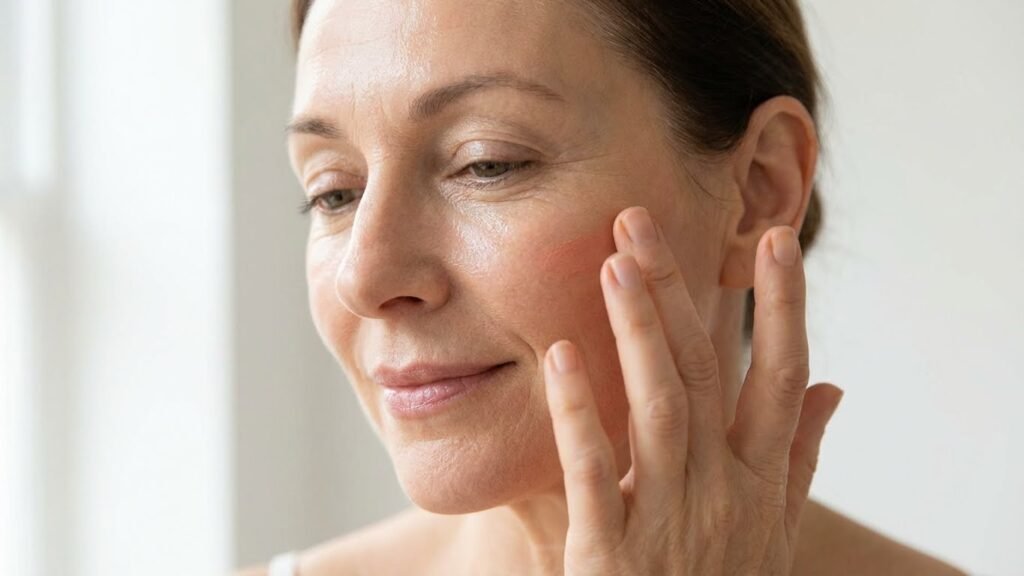
The goal here? Fresh, lit-from-within skin—not invisible makeup.
The Formula for Natural Makeup
- Minimal base, maximum skin prep
- Soft brows instead of harsh arches
- Cream shadows in satin finishes
- Lip colors that brighten without bleeding
Think rosy cheeks after a brisk walk, not full glam contour. This approach to natural makeup for 50+ enhances features without masking texture.
Common Makeup Mistakes That Make Mature Skin Look Older
These habits sneak up on us—but they’re easy to fix. Too much powder Instead: Set only where needed or use setting spray
Heavy under-eye concealer Instead: Use a tiny amount + corrector
Dark matte lipsticks alone Instead: Balance with blush or a satin finish
Skipping blush Instead: Add soft color for instant lift
No judgment—just better results.
Expert Tips: Makeup Artists’ Secrets for Mature Skin
Pros swear by these subtle tweaks:
- Mix foundation with moisturizer for flexibility
- Apply less product than you think—then stop
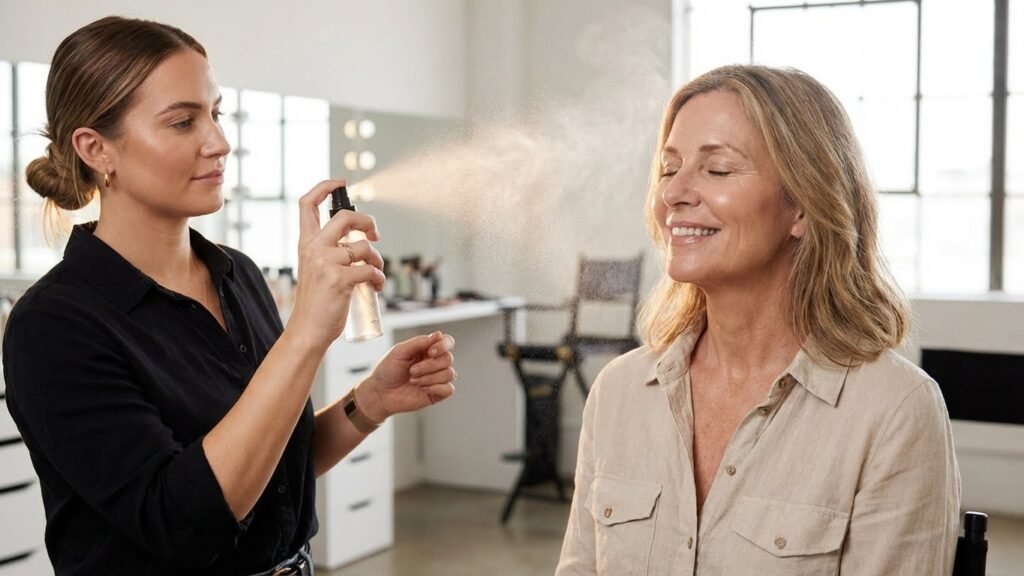
- Use setting spray instead of powder for longevity
These tricks are often used on red carpets—but work beautifully in real life too.
FAQs: Makeup for Mature Skin
What makeup is best for aging skin?
Hydrating, lightweight formulas that move with your skin—not against it.
Is powder makeup bad for mature skin?
Not always—but it should be used sparingly and strategically.
How do you keep foundation from settling into wrinkles?
Prep well, apply thin layers, and press product in with a damp sponge.
What foundation finish is best?
Natural or radiant finishes outperform matte for most mature skin types.
Conclusion: Enhance, Don’t Hide Your Skin
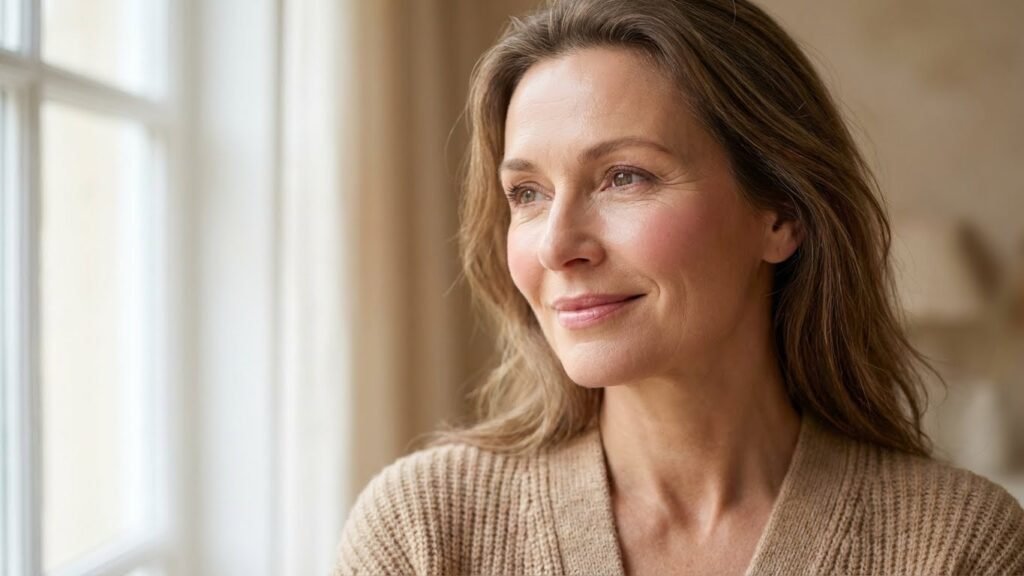
Great makeup for mature skin isn’t about erasing age—it’s about embracing it with smarter choices. When you focus on hydration, lighter formulas, and flexible textures, makeup becomes effortless again.
Experiment. Edit your routine. Let your skin look like skin.